
Buying guide · Milk
Best milk jugs for home espresso
Choose a milk-steaming pitcher by wand position, fill level, capacity and grip. Compare Sage Temp Control 480ml and Pro Control 420ml for home espresso.
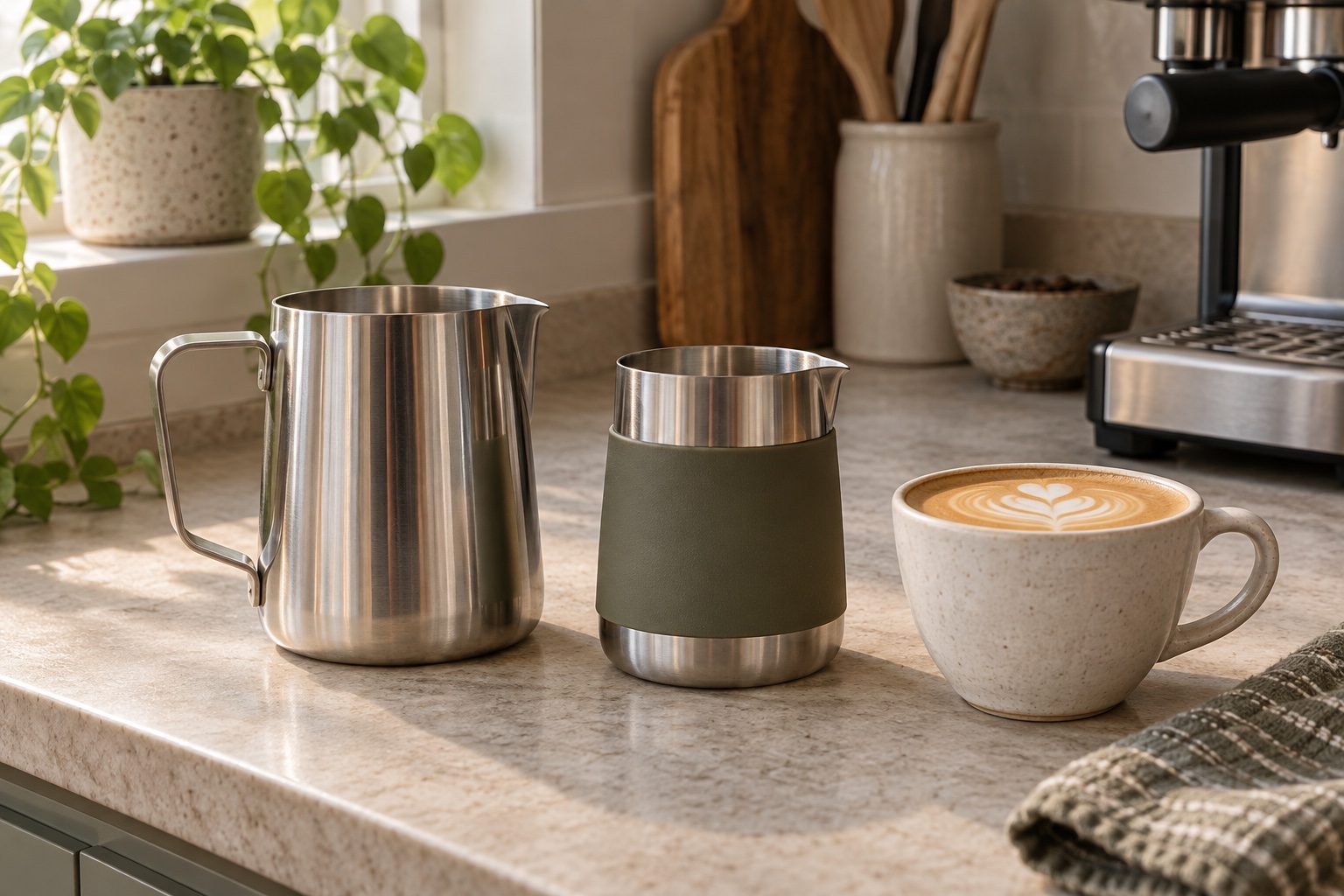
No steam wand means a pouring jug will not itself heat or froth milk.
Milk must reach the wand yet leave expansion room; follow machine guidance.
Handled versus handleless is personal, not a quality ladder.
Rinse the jug and clean the wand promptly after every use.
The useful shortlist
Two useful but different Sage jugs
Neither is a universal upgrade. We chose exact UK-listed models with manufacturer specifications and distinguish their practical purpose.
SES003BSS0NEU1, 480ml
- 480ml
- Stainless steel
- Temperature indicator
Temperature-guided jug
Sage The Temp Control Jug
Best for: one or two milk drinks with a steam wand
A 480ml stainless milk pitcher with integrated temperature indicator strip and controlled-pour spout. First check whether your machine includes a jug.
Why it earns a place
- Temperature indicator
- 480ml
- Pouring spout
What to weigh up
- May duplicate an included jug
- Indicator needs care
Skip it if You have no steam wand or already have a suitable pitcher.
Check the official specification →SEA401PSS0ZEU1, 420ml
- 420ml
- Handleless
- Silicone sleeve
Compact handleless jug
Sage Pro Control Jug
Best for: a practiced milk-steaming routine where hand position matters
A 420ml handleless stainless pitcher with removable silicone sleeve and angled opening. A specialist preference rather than a required upgrade.
Why it earns a place
- Angled opening
- Removable sleeve
- Compact
What to weigh up
- Grip is personal
- Smaller volume
- Higher cost
Skip it if You need a handle or are buying your first jug.
Check the official specification →| Jug | Volume | Grip | Main feature | Better for |
|---|---|---|---|---|
| Sage Temp Control | 480ml | Handle | Temperature strip | First separate pitcher |
| Sage Pro Control | 420ml | Handleless sleeve | Angled opening | Preferred handleless technique |
A milk jug is a tool for a steam wand, not a milk frother by itself. Its shape and fill level help you position the wand and create a rolling movement in the milk, while the spout affects how easy it is to pour. If your espresso machine already includes a stainless jug, learn with it first. The money may be better used on fresh milk and cleaning supplies than on another near-identical pitcher.
Sage Temp Control 480ml: a familiar starting shape
Sage UK specifies a 480ml capacity, a pouring spout and an integrated temperature indicator strip. That gives a beginner a visible cue while learning the heating stage. It has a conventional handle and enough room for a single milk drink or potentially two smaller drinks, depending on the machine's minimum fill and the amount the milk expands. Do not simply fill it to the brim. Follow the machine's wand placement and food-safety instructions rather than treating the strip as a safety guarantee.
The practical objection is duplication: Sage and other espresso makers often include a pitcher. Confirm yours is missing or genuinely unsuitable. Choose for: a replacement handled jug with temperature feedback. Skip if: the included jug already lets you steam the quantity you drink.
Sage Pro Control 420ml: a different grip, not a default upgrade
The Pro Control has a 420ml capacity, handleless body, removable silicone sleeve and angled opening. The lower volume can suit a smaller single-drink routine, and the opening is intended to improve the view while steaming. A handleless grip can feel intuitive to some people and awkward to others, especially when the jug becomes warm. It is a preference to select knowingly rather than a compulsory step toward latte art.
Choose for: a practiced user who specifically wants a handleless pitcher. Skip if: you are still learning where to hold a standard jug or need more volume.
Match jug and drink, not just cup size
The relevant amount is cold milk before steaming, with enough depth for the wand and headroom for aeration. A huge jug with a tiny milk dose may leave the steam tip exposed; an overfilled small jug can spill. Use your machine maker's minimum and maximum guidance. For oat drinks, choose a product formulated for steaming if texture is the goal, and expect cartons to behave differently; our oat-milk setup guide separates the coffee base from the milk route.
Immediately after steaming, clean and purge the steam wand as your machine directs and rinse the jug. Milk residue becomes harder to remove if left on warm steel. A handheld frother or heated jug is a separate option for machines without a wand.
A two-minute fit check before you buy
Look at the milk quantity you pour for one drink, not only the size printed on the cup. Cold milk needs to reach the steam tip when the jug is tilted, while leaving space for the milk to expand and circulate. If your existing pitcher struggles with that amount, a different capacity may help. If it already forms a steady whirlpool without spilling, a new jug is unlikely to be the first improvement to make. Our milk-steaming method explains the positioning that matters more than a branded spout.
Then check the grip in the cramped space around your machine. A handle gives a consistent place to hold hot steel away from your fingers. A handleless sleeve lets you change grip, but you need to be comfortable holding the body during heating and pouring. Consider where the wand reaches, where the jug rests afterwards, and whether the opening gives you room to see the tip. Those practical details matter more than claiming one shape automatically makes better latte art.
What a temperature strip can and cannot tell you
The Temp Control's indicator is a useful visual cue while learning, especially if you tend to keep steaming after the milk is already hot. It is not a substitute for your machine's instructions or a promise of identical temperature throughout the jug. Stop according to the drink and milk you are preparing, and clean the wand immediately. If you want a fuller explanation of temperature and texture, see milk temperature for coffee.
Frequently asked questions
Is 350ml or 600ml better?
Neither universally. Choose from the cold milk quantity you actually steam, the wand's minimum immersion and the required headroom. Manufacturer capacity is not a recommended fill line.
Do I need a pointed spout for latte art?
A controlled spout helps pouring, but texture and technique come first. It will not turn coarse foam into microfoam.
Can I heat milk in a pitcher without a steam wand?
The pitcher itself does not heat or aerate. Use an appropriate heating method and device, following food and appliance safety guidance.
Sources and scope
Features and volumes were checked with Sage Temp Control 480ml and Sage Pro Control 420ml.