
Buying guide · Bean-to-cup
Best bean-to-cup coffee machines for UK homes
Choose a bean-to-cup machine for black coffee or milk drinks. Compare exact Magnifica models, daily cleaning, kitchen fit, running costs and current availability.
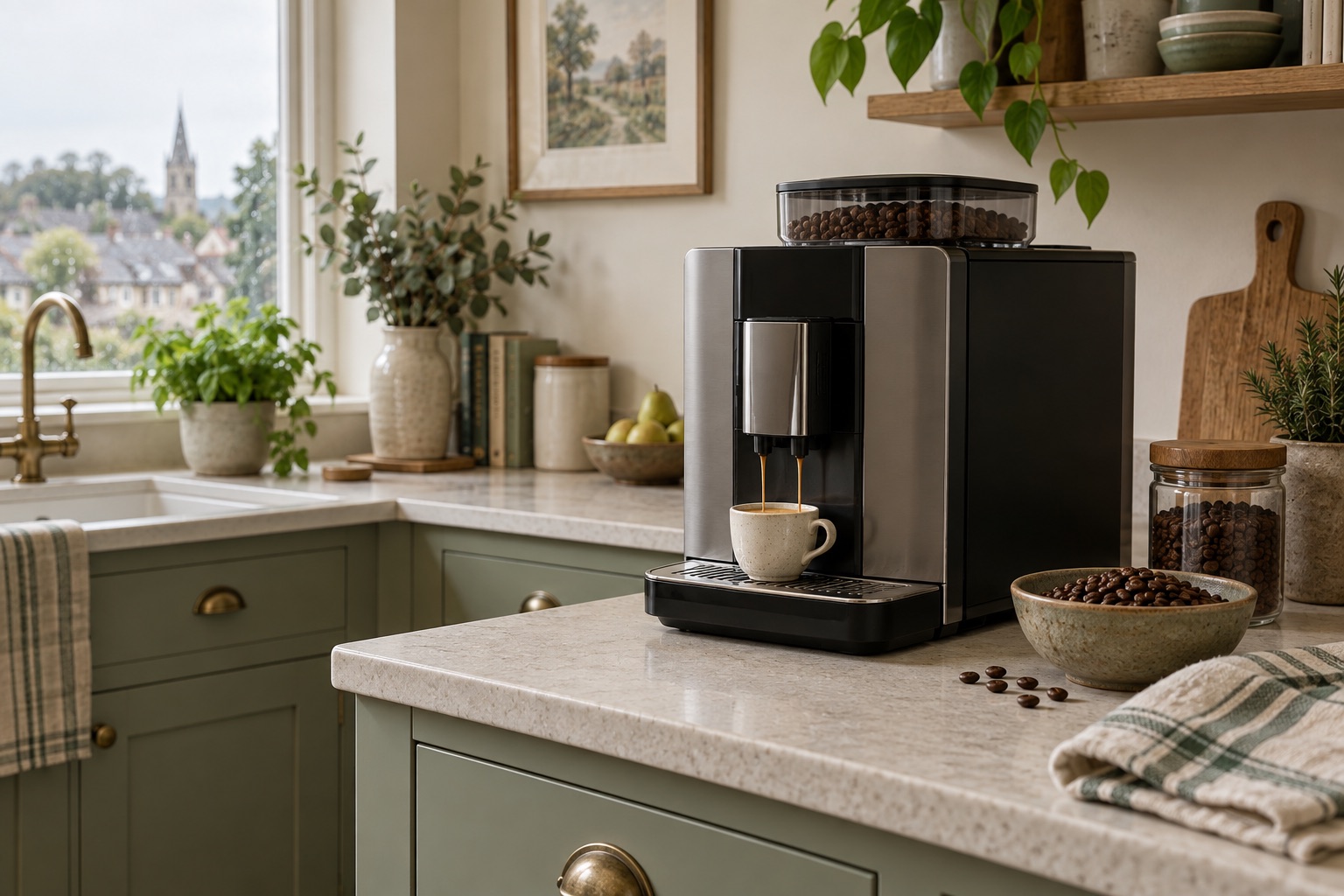
Automatic carafe or manual wand changes daily use more than the number of coffee icons.
Allow access above the hopper and around the water tank and brew unit.
A one-button recipe helps a household; a wand may suit someone who enjoys adjusting milk.
Expect grounds, drip-tray, brew-component and milk-system cleaning.
The useful shortlist
Two distinct bean-to-cup routes
The Magnifica S is the practical current starting point. The automatic-milk Magnifica Start is a conditional comparison until the exact variant has a suitable offer.
ECAM22.110.B
- ECAM22.110.B
- Traditional milk frother
Manual-milk automatic
De’Longhi Magnifica S
Best for: fresh-bean espresso with a manual milk wand
A built-in grinder and automatic brewer, paired with a traditional milk frother. Milk still takes hands-on work.
Why it earns a place
- Built-in grinder
- Manual milk control
- Two-cup dispensing
What to weigh up
- Milk is not one-touch
- Regular brew-unit and wand care
Skip it if You want one-touch milk drinks.
Check the official specification →ECAM220.61.GB
- 250g bean container
- Four one-touch recipes
- ECAM220.61.GB
One-touch bean-to-cup
De’Longhi Magnifica Start
Best for: a household that wants fresh beans and automatic milk drinks
This exact Magnifica Start variant includes an integrated grinder and LatteCrema Hot automatic milk system, with one-touch espresso, coffee and latte macchiato. It removes daily puck preparation but adds milk-system cleaning.
Why it earns a place
- Integrated grinder
- Automatic milk drinks
- Removable cleaning components
What to weigh up
- Large counter footprint
- Milk system needs regular cleaning
- Less direct control than separate equipment
Skip it if You enjoy dialling in separate grinder and espresso settings, or have a very shallow counter.
Check the official specification →| Exact model | Coffee preparation | Milk | Best fit | Main compromise |
|---|---|---|---|---|
| Magnifica S ECAM22.110.B | Built-in grind and brew | Traditional manual frother | Espresso and occasional self-frothed milk | Manual milk work |
| Magnifica Start ECAM220.61.GB | Built-in grind and brew | LatteCrema Hot automatic system | Shared daily milk drinks | No current offer for exact variant |
A bean-to-cup machine grinds whole beans and prepares the coffee inside one appliance. That removes the separate grinder and portafilter routine, but not the decisions about drink size, milk or cleaning. For most homes the first question is simple: will anyone prepare milk every day? If not, begin with a straightforward machine such as the manual-frother Magnifica S rather than paying and making space for an automatic carafe. If several people want milk drinks at the touch of a button, an automatic system may earn its place—provided the exact model is available and its cleaning routine suits the household.
The two machines below represent those different workflows, not every bean-to-cup machine on sale. The Magnifica S ECAM22.110.B is the straightforward manual-milk option. Consider the automatic-milk Magnifica Start ECAM220.61.GB only if the exact variant has a suitable current offer. Its model-search link may show other suffixes with a different milk arrangement, so check the selected machine rather than assuming a similar name means the same features.
Magnifica S ECAM22.110.B: coffee first, milk when needed
The Magnifica S grinds and brews at the touch of a coffee button, with adjustable aroma and drink quantity. Its traditional frother is separate from that automatic coffee step. You position the milk jug, texture or heat the milk yourself and clean the wand afterwards. De’Longhi also specifies twin espresso dispensing. Those features suit a home where black coffee is the default, two short cups are sometimes useful, and a milk drink is occasional or someone enjoys making it.
It is less attractive if “automatic” means a finished cappuccino with no hands-on milk work. A manual frother can be satisfying, but it adds a jug, cloth and technique to the morning. If nobody will use it, do not treat the wand as free value. For black-coffee priorities, see the bean-to-cup guide for black coffee. For a firm spending limit, the under-£500 guide explains why a current delivered price matters more than a historical deal.
Magnifica Start ECAM220.61.GB: one-touch milk, conditional purchase
This exact Start variant has De’Longhi's LatteCrema Hot carafe and four one-touch choices: espresso, coffee, latte macchiato and hot water. A shared milk-drink household may prefer putting cold milk in the carafe and selecting a drink to steaming each portion manually. The trade-off is another food-contact system to store, rinse and clean. The automatic cleaning function is part of the routine, not permission to leave milk in the machine or ignore the manual's care instructions.
The Start's longer “coffee” drink is not a paper-filter brew, and the named recipes are not a guarantee that your preferred flat-white ratio comes out unchanged. Check the exact model's recipe controls and whether the resulting coffee and milk volumes suit the cup you use. If the exact ECAM220.61.GB is still without an acceptable offer, do not swap in a different Magnifica Start suffix without checking its carafe and recipes. You can wait, compare a correctly specified alternative, or choose the available manual-milk route only if you actually want that extra work. A separate milk frother is another option, but it adds a second appliance and its own washing.
Match the machine to the drinks you actually make
| Your normal week | Better starting point | What to check before buying |
|---|---|---|
| Mostly espresso or short black coffee | Magnifica S | Coffee strength and volume controls; no need to pay for automatic milk |
| Black coffee daily, milk only at weekends | Magnifica S | Will someone use, purge and wipe the wand when milk is made? |
| Several milk drinks most mornings | Automatic-milk Start, if the exact variant returns | Carafe care, milk storage, cup size and current exact-model offer |
| Large, clear black mugs for several people | Compare a filter machine | Bean-to-cup “coffee” is a different drink from a paper-filtered pot |
Count finished drinks, not button presses. Two people each making a milk drink can mean two coffee cycles, milk preparation and rinsing. One person making a black coffee has a very different workload. If you are unsure whether the longer bean-to-cup drink is what you want, read bean-to-cup versus manual espresso and compare filter machines for batch black coffee.
Fit the whole routine into the kitchen
Measure the worktop depth with the drip tray and cup in place, not just the machine's advertised body width. Then allow room above for the bean lid and around the sides or front for the water tank, grounds bin and any removable brewing component. Check the exact manual's access directions before placing a machine under wall cupboards. A narrow-looking model is frustrating if it has to be pulled forward for every refill or clean. The small-kitchen setup guide walks through a practical layout.
Keep beans and water easy to replenish. A large hopper is not a reason to leave beans there for weeks if you drink only one cup a day. If you often switch between regular and decaf, check the exact manual for any permitted pre-ground chute and dose rather than pouring ground coffee into the bean hopper. Decide where a milk carafe will live between uses, and make sure the sink-side cleaning route is realistic. The water-hardness guide helps set the machine's care schedule to your local supply.
Calculate ownership beyond the machine price
Use a normal week as the unit of comparison. Write down the number of drinks, the beans you expect to use, milk if relevant, and the maintenance products permitted by the manual. Multiply the weekly consumables by 52, then add the machine purchase and any water filter, descaler or milk-system supplies you will actually need. Avoid assuming a fixed cost per cup: dose, bean price, wastage, drink volume and household use all vary.
Daily work includes filling water, disposing of used grounds and emptying the tray when required. A wand needs prompt wiping and purging; an automatic carafe needs its prescribed rinse and wash. Periodic work can include brew-component care, cleaning and descaling in response to the model's instructions and your water hardness. The machine-cleaning checklist separates those jobs. If the machine replaces a pod routine, compare finished drinks over a year using the pod-cost worksheet rather than assuming whole beans always repay the higher upfront cost.
Before you choose a seller
Confirm the full model suffix, the actual milk hardware shown and included, the delivered price, plug and warranty terms. A product-family search is useful for finding alternatives, but it is not evidence that a differently named or pictured variant has the same carafe. Check that the offer is for a new UK-supported machine if that is what you expect, and read the return conditions. If the current offer is poor or absent, it is reasonable to postpone the purchase rather than turn a conditional comparison into a recommendation.
Frequently asked questions
Is bean-to-cup the same as a built-in-grinder espresso machine?
Not necessarily. Some integrated-grinder machines still require a portafilter, tamp and manual extraction. These two De’Longhi models automatically prepare the coffee after grinding.
Can I use pre-ground coffee?
Follow the exact model manual for any bypass chute and permitted dose. Never put pre-ground coffee in a bean hopper. Do not assume a decaf chute is present merely because another Magnifica has one.
How often must I clean one?
Empty waste when prompted, clean milk-contact parts after use, and follow the model-specific cleaning and descaling indications. Water hardness and use affect intervals. See the cleaning checklist and descaling guide.
Does a bean-to-cup machine make the same coffee as a filter brewer?
No. Its longer coffee setting extends an internally brewed drink; it does not send water through a paper-filtered batch. If you mainly want several clear black mugs, the filter-machine comparison is a better next step.
What if I want a flat white every morning?
Choose the coffee base and milk workflow together. A manual wand gives more direct control but needs practice; an automatic carafe saves active steps while adding washing and may require volume adjustment for a smaller cup. The flat-white machine guide compares the routes.
Sources and scope
The model-specific milk systems, recipes and coffee controls come from De’Longhi’s Magnifica Start specification and Magnifica S specification. Check the exact variant, current price, seller and availability before choosing.