
Troubleshooting · Taste
Why does my coffee taste sour?
Separate pleasant acidity from unpleasant sharp sourness and troubleshoot under-extracted pour-over, cafetière and espresso with measured changes.
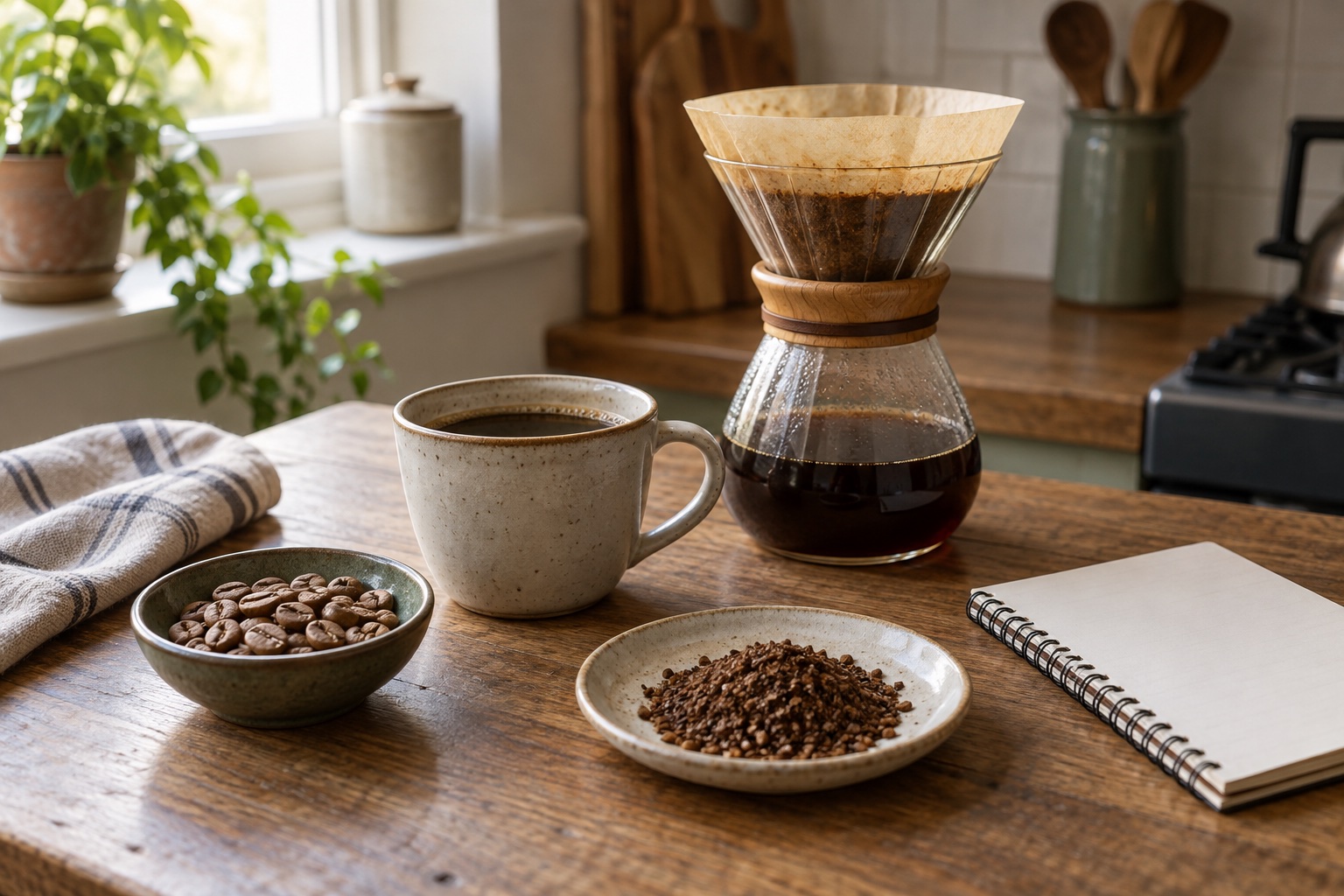
Sour does not always mean spoiled coffee.
A fast, pale espresso needs a different diagnosis from a light filter roast.
Keep the dose-to-water ratio steady while tuning extraction.
Taste once the coffee cools a little; heat can hide distinctions.
Coffee can be lively, citrus-like and pleasant without being a problem. “Sour” becomes a troubleshooting term when the cup is sharply acidic, thin and finishes abruptly rather than sweetly. That often points toward too little extraction, but the bean, roast, water and your own preferences are part of the picture.
Distinguish the coffee from the recipe
Check the bag's roast and flavour description. A light roast may emphasise fruit acidity. Compare it with a medium roast using the same brewer and a repeatable recipe. If the medium roast tastes rounded but the light roast stays sharply sour, you may need a different grind and contact time for the latter—or you may simply prefer a less acidic coffee.
Do not diagnose from one uncontrolled cup. Weigh coffee and water: the ratio guide offers 15g coffee to 250g brew water as an everyday filter starting point. A cup with half the intended dose can taste thin regardless of extraction. Espresso uses dry dose and beverage yield instead, so do not apply the filter table to the machine tank.
Fix an under-extracted filter or cafetière brew
Keep coffee and water amounts fixed. Try one slightly finer grind step. In pour-over, watch whether the water was simply passing through too fast, the bed was unevenly wet, or the filter stalled. A more even pour and appropriate grind size can help. In cafetière, use a consistent steep and stir only as your chosen method requires, then compare a longer contact time if the cup is underdeveloped. Avoid making a huge jump: too fine or too long can introduce bitterness.
The SCA brewing-chart discussion links low extraction with sour or grassy perception. It is a directional model, not an instrument that can taste your cup remotely. Record the changes and judge the drink.
Fix a sour espresso without overcorrecting
If the shot runs very fast and tastes both sour and watery, record dose and beverage weight. Check that the basket is correctly filled for the manufacturer's guidance, grounds are distributed evenly, and the grinder can make a small finer adjustment. A much longer beverage from the same dose may dilute the cup while extracting more; decide what changed by weighing it. Breville's espresso guidance uses dose, grind and yield as controllable variables.
If the shot is already slow yet sour, do not blindly grind finer. Uneven extraction, an unexpectedly low brew temperature, a difficult light roast or a dirty basket may be involved. Follow the machine's warm-up and cleaning guidance and change one variable at a time. Our watery espresso guide separates speed from strength.
Water and freshness
Water chemistry can shift how acidity presents. Check the local water guide before buying an expensive filtration system; TDS alone does not identify hardness. Beans that have gone stale may taste flat rather than fresh and fruit-forward, but freshness is not a universal sourness diagnosis. Try a small new bag with a known roast date for a fair comparison.
A simple four-cup sequence
Start with a measured baseline, then make one finer-grind version. If that becomes sweeter, keep the direction. Next adjust brew time while returning the grinder to baseline, and note the result. Finally compare a different roast with the original method. Stop when the cup is enjoyable; there is no numerical extraction target every home brewer must hit.
Frequently asked questions
Is sour coffee unsafe to drink?
Sharp acidity alone does not imply a safety issue. If beans or brewed coffee show mould, unusual contamination or have been stored unsafely, discard them; taste troubleshooting does not override food safety.
Should I add more coffee?
Only if the drink is also too dilute and the recipe was under-dosed. More coffee changes strength and flow; it does not automatically fix poor extraction.
Why is a light roast harder to dial in?
Light roasts can present more acidity and may need a different grind or contact time to reach the sweetness you want. Taste preference is also legitimate; you do not have to force a particular bean.
Helpful products
A grinder only if adjustment is the bottleneck
The Encore suits filter; the Encore ESP adds a finer espresso range. Do not buy either before checking your recipe and the coffee itself.
ZCG485 / 485-230V-G
- 40 settings
- 40mm steel burrs
- 300g hopper
Best simple filter grinder
Baratza Encore
Best for: filter, pour-over and cafetière without screen or dosing extras
A straightforward hopper grinder with 40 steps and strong UK parts support. It keeps controls simple and puts the budget into a well-established filter-brewing platform.
Why it earns a place
- Straightforward controls
- Replacement parts available
- Compact footprint
What to weigh up
- Not our pick for unpressurised espresso
- No timer or dose display
Skip it if You use a traditional non-pressurised espresso basket; move to the Encore ESP.
Check the official specification →ZCG495 / 495W-230V-G
- 40 settings
- 40mm steel burrs
- 230V UK model
Best fit for most homes
Baratza Encore ESP
Best for: households switching between espresso and filter
Its adjustment range is deliberately divided between finer espresso settings and broader filter settings, so it is the most convincing one-grinder answer here for a mixed routine.
Why it earns a place
- Dedicated espresso and filter ranges
- Simple hopper adjustment
- Dosing cup included
What to weigh up
- Manual dosing rather than a timed display
- Plastic-led body
Skip it if Timed portafilter dosing is the feature that would make everybody else in the house use the setup.
Check the official specification →Sources and scope
The directional extraction model comes from the Specialty Coffee Association; the espresso variable approach is supported by Breville's dial-in guide.