
Troubleshooting · Grinders
Coffee grinder static: why grounds fly and what helps
Understand why ground coffee clings to plastic and scatters, and try dry cleaning, a calmer routine and cautious manufacturer-approved moisture techniques.
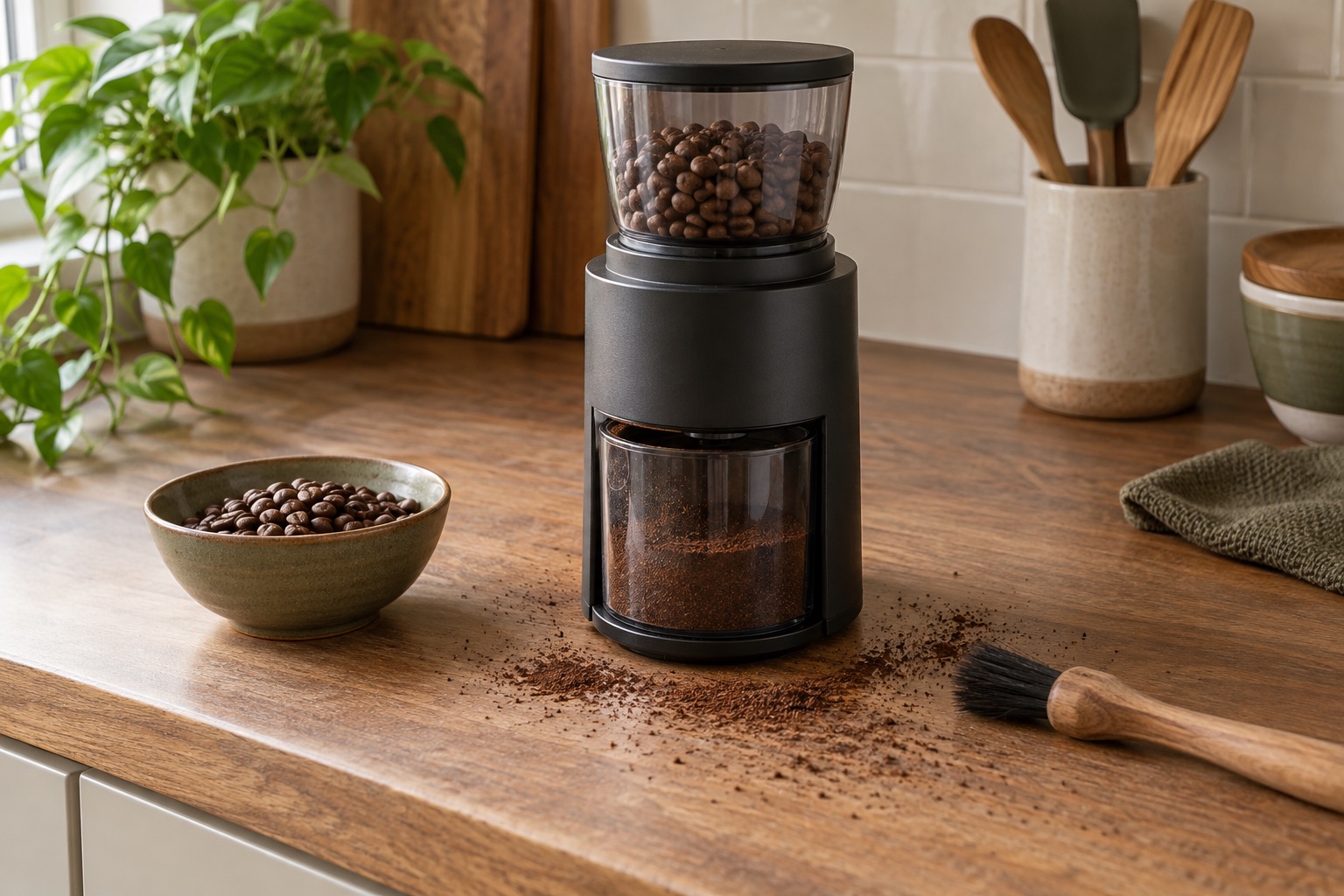
Chaff and fines can look like static mess but need different cleaning.
Never spray water into a grinder or electrical housing.
Do not let a damp hopper sit full of beans.
A model's maintenance instructions outrank a social-media hack.
If grounds jump out of the cup, cling to its walls or leave a brown halo after every grind, static electricity may be part of the problem. Coffee particles rub against burrs, chute and container as they move. Lightweight chaff from the bean can also scatter, so not every fleck is an electrical fault. Baratza's explanation of chaff describes why some coffees seem messier than others.
Try the dry fixes first
Unplug the grinder before cleaning. Empty the hopper or single-dose chamber as the manual permits and brush away retained grounds from accessible, removable parts. Do not push tools into the powered mechanism. Wash only parts the manufacturer says are washable, then dry them completely before reassembly. Our grinder-cleaning guide walks through safe dry maintenance.
After grinding, leave the cup in place for a few seconds so airborne fines settle. Tap only if the maker permits it, and avoid banging precision parts. Keep the cup close to the brewer or portafilter when transferring. A wide, low-sided container may scatter more grounds than a correctly fitted dosing cup. Check that the chute and cup seat are not clogged or misaligned.
What about a drop of water on beans?
The “Ross Droplet Technique” lightly moistens whole beans before grinding. Peer-reviewed research on coffee-grinding electrification found that water can suppress charge in tested conditions, while too much can cause caking or corrosion concerns. Baratza discusses a very small amount for some grinders. This is not a universal recommendation. Read your grinder's manual and warranty guidance first, especially for a hopper grinder or a machine whose maker prohibits moisture.
If permitted, the concept is a barely damp dose of beans, not spraying the burrs, pouring water into a hopper, or storing wet beans in the machine. Stop if grounds cake in the chute or cleaning becomes harder. Do not try this on an electrical fault. Simple dry measures may already solve the mess.
When it is not static
Grounds spilling from a cracked container, a mis-seated hopper, a blocked chute or a badly fitting portafilter fork are mechanical issues. Check parts and manufacturer support. Clumping can also come from oily beans and retained grounds, not just charge. A new grinder is not necessary merely because one winter bag produces more chaff; compare another coffee and humidity conditions first.
For a new purchase, think about the daily collection workflow and removable-part cleaning, not an unsupported “anti-static” marketing claim. Our single-dose versus hopper guide and filter grinder guide help with that broader choice.
Frequently asked questions
Is static dangerous to the grinder?
Ordinary grounds clinging to a cup are usually a nuisance rather than proof of an electrical fault. Sparks, shocks from the housing, a burning smell or damaged cable are different: stop using the appliance and contact the maker.
Does a metal cup remove static?
It can change how grounds collect, but it is not a guaranteed fix. Chute geometry, bean, moisture and container fit all matter.
Can I wash the burrs?
Only if the model instructions explicitly allow it. Many burr assemblies and motors should stay dry. Use the approved brush or cleaner instead.
Sources and scope
The mechanism and cautious moisture discussion come from Baratza's coffee-chaff guidance and published electrification research. Model-specific prohibitions and cleaning directions override general techniques.