
Water · Choosing
Tap vs filtered water for coffee: when a filter helps
Compare safe UK tap water with jug-filtered water for coffee taste and scale, including hardness, chlorine, cost, filter care and a simple home trial.
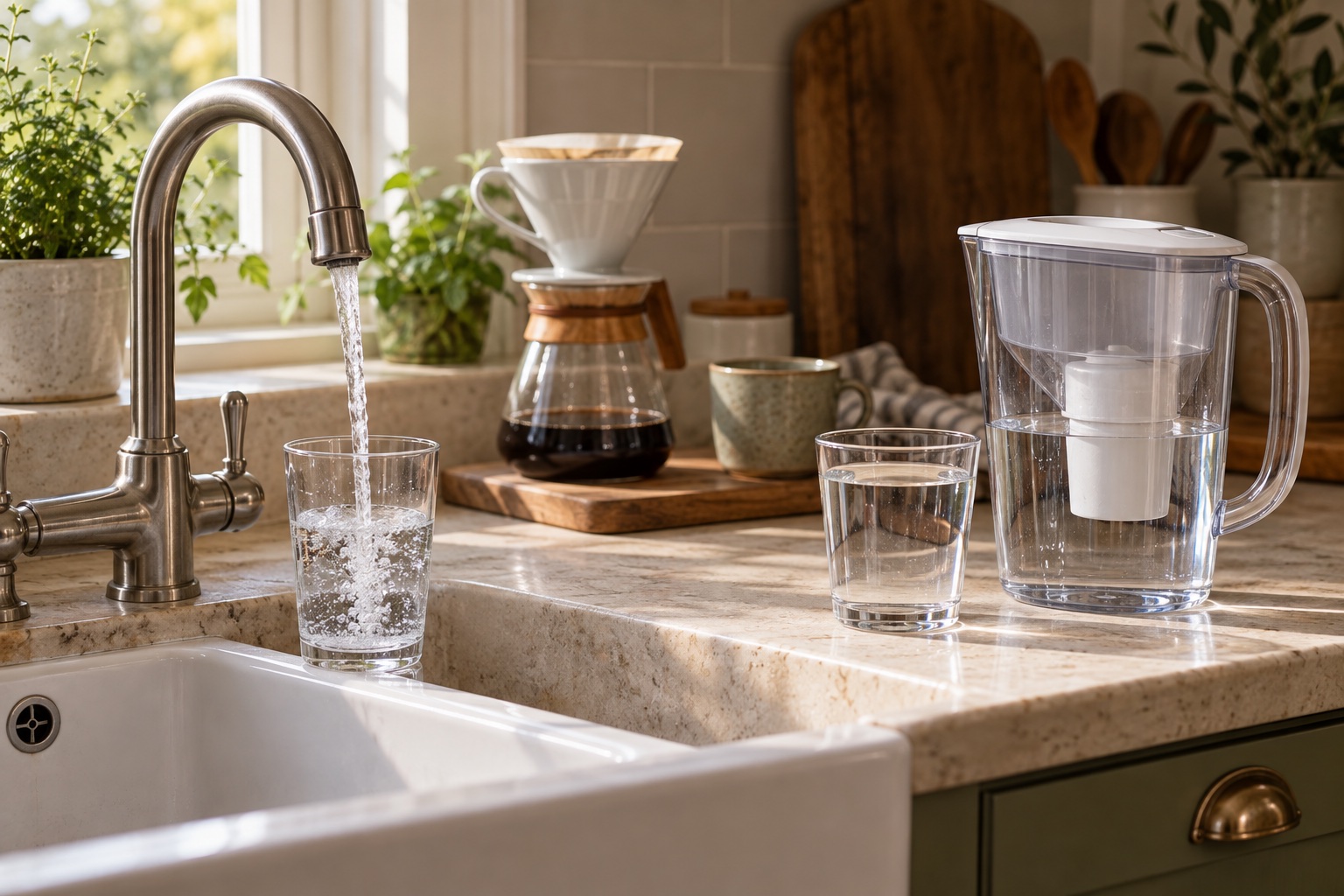
Check your water supplier and, if needed, test hardness at the cold tap.
Taste the same coffee with the same recipe before changing equipment.
A jug can reduce some tastes and scale exposure, but needs regular cartridge changes.
Keep an unsoftened drinking-water supply if your home has a salt-regenerated softener.
“Filtered is better” is too broad to guide a coffee purchase. Water's mineral content and alkalinity affect extraction, while chlorine or other taste notes can affect what reaches the cup. The Specialty Coffee Association describes water composition as a taste variable, not a single universal hardness target for every home. Your tap may already make coffee you like.
Is UK tap water suitable for coffee?
For households on a public supply, the Drinking Water Inspectorate says routine extra treatment is not needed as a health-protection measure. Use cold water from a drinking-water tap and follow any active local water-company notice. A filter is normally about taste or scale management, not making standard mains water safe.
Find the local water-quality result through your supplier; our UK hardness guide shows the route. Hardness varies within and between areas, so “London water” or “Scottish water” cannot determine your exact setting. A kettle that scales rapidly is a practical clue, but a strip or supplier result gives a better starting point. A TDS meter cannot identify hardness on its own.
What a jug filter can change
A jug passes water through a cartridge before brewing. The specific media, cartridge life and starting water determine the result. BRITA positions MAXTRA PRO Limescale Expert for hard-water hot drinks, while Pure Performance is its broader everyday variant. Both need a compatible jug and scheduled replacement; the maker recommends changing cartridges at least every four weeks. An unclean jug or overdue filter is not an upgrade.
Filtration can reduce some scale exposure, but it does not make a machine maintenance-free. If a machine specifies an in-tank cartridge, that is a separate fit decision. See coffee-machine water-filter compatibility before buying one. A jug can also be an awkward daily extra in a small kitchen; if the coffee already tastes good, that friction may not be worth it.
A fair two-cup test at home
Use the same beans, grind, dose, brew method and water quantity for two cups. Brew one with fresh cold tap water and one with properly prepared, recently filtered jug water. Let both cool to the same drinking temperature. Taste for unpleasant odour, flatness, excessive harshness or a more balanced cup—but do not expect a dramatic result from every tap. Repeat on a second day before committing to cartridges. The test does not replace measuring hardness when your espresso machine asks for a setting.
If you prefer filtered water, write down the cartridge change date and clean the jug per its manual. If the machine has a hardness menu, set it for the water you actually put in the tank, following its instructions. Do not combine a filter and a guessed “softest” setting simply to suppress descale prompts.
Frequently asked questions
Will filtered water stop limescale completely?
Do not assume so. Reduction depends on the cartridge, starting hardness, water volume and replacement. Continue to follow the descaling programme.
Is bottled water better?
Not automatically. Mineral composition varies by brand, and some bottled water is hard. Check the label, cost, waste and machine guidance.
Is softened water the same as jug-filtered water?
No. A domestic salt-regenerated softener uses ion exchange and can raise sodium. Read our softened-water guide before using that tap for drinking or a coffee maker.
Helpful products
Two different jug-filter routes
Use only with a compatible BRITA jug. Choose the hard-water-oriented cartridge for a scale problem, or the everyday cartridge for a taste-led existing jug routine.
Six-cartridge pack
- Six cartridges
- MAXTRA PRO jug format
- Four-week replacement guidance
Hard-water jug route
BRITA MAXTRA PRO Limescale Expert
Best for: households with a BRITA jug and noticeable kettle scale
A jug cartridge designed to reduce limescale exposure before water reaches a kettle or coffee maker. It is a jug refill, not an in-tank machine cartridge.
Why it earns a place
- Purpose-built for hard water
- One jug serves several brewers
- Genuine six-pack listing
What to weigh up
- Regular cartridge replacement
- Jug space and refilling
- Does not replace a machine's own maintenance cycle
Skip it if Your machine requires its own proprietary tank cartridge, or you do not own a compatible jug.
Check the official specification →Six-cartridge pack
- Six cartridges
- MAXTRA PRO jug format
- Four-week replacement guidance
Everyday jug route
BRITA MAXTRA PRO Pure Performance
Best for: a compatible BRITA jug where tap-water taste matters more than maximum scale reduction
The everyday MAXTRA PRO cartridge prioritises filtered drinking water and taste; BRITA positions Limescale Expert as the stronger hard-water option.
Why it earns a place
- Widely used jug format
- Genuine six-pack
- Easy shared kitchen routine
What to weigh up
- Less scale-focused than Limescale Expert
- Four-week changes
- Not a direct replacement for an in-tank filter
Skip it if Heavy scale reduction is your main goal; compare Limescale Expert and your machine's requirements.
Check the official specification →Sources and scope
The public-supply and softener distinction follows the Drinking Water Inspectorate. The taste framing comes from the Specialty Coffee Association, and cartridge differences from BRITA. The two-cup trial is a practical comparison method, not a laboratory measurement.