
Troubleshooting · Espresso
Why is my espresso watery? Diagnose the shot
Use dose, yield, shot flow, basket type and grind to diagnose thin or fast espresso before replacing your machine or adding more coffee.
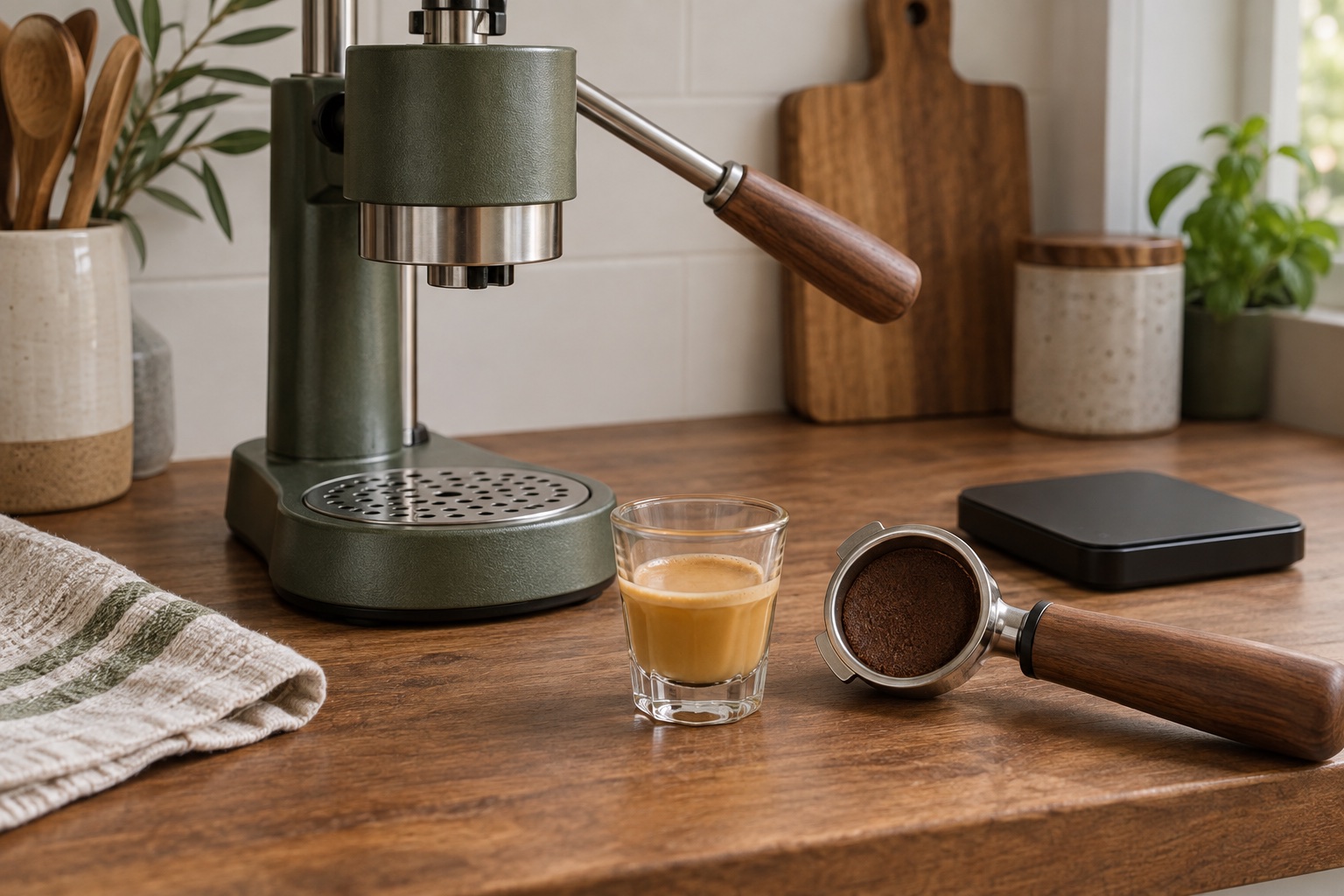
Pale crema alone is not a reliable strength measurement.
A pressurised basket and a single-wall basket behave differently.
Too coarse a grind or too small a dose can speed up flow.
A slow yet thin shot calls for a different diagnosis.
“Watery” can mean low concentration, a shot that rushes through, or coffee with little body despite a normal-looking volume. Each points to a different lever. Buying a new machine is rarely the first experiment. Put a scale under the cup and write down the dry coffee mass and beverage mass; this turns a vague complaint into a repeatable shot.
The first three checks
Dose: does your basket hold the amount of coffee you are using? A half-filled double basket may not create the resistance intended for that design. Use the machine's recommended range, not a number copied from a commercial café. Yield: how much liquid is in the cup? A very long shot from the same dose is more diluted. Try stopping earlier while keeping dose and grind fixed. Flow: does it run quickly and pale from the start, or dribble slowly? Breville's espresso troubleshooting identifies coarse grind and insufficient dose among causes of fast, weak extraction, but the machine and basket still matter.
For example, 18g dry coffee and 36g beverage is a common experimental starting point for a double espresso, not a mandatory recipe for every basket or bean. If your machine's basket is designed for 14g, do not force 18g into it. The useful habit is recording your own input and output.
Fast and thin: adjust resistance carefully
With a single-wall basket, move a capable burr grinder a small step finer, keeping dose and target yield the same. Distribute grounds evenly and tamp consistently; violent tamping cannot compensate for a grossly wrong grind. If the shot improves but becomes harsh, step back or adjust yield. If you have only pre-ground coffee or a blade grinder, a pressurised basket may be more forgiving, but it has a different flavour ceiling. Our espresso grinder guide explains when a grinder upgrade is genuinely relevant.
With a pressurised basket, outlet design creates much of the resistance. A fast shot can reflect too little coffee, a coarse or stale pre-ground coffee, a basket blockage elsewhere, or the machine's programmed beverage volume. Consult the model manual before applying single-wall timings as rules.
Slow but still watery
A slow stream does not guarantee an even extraction. Channeling can send some water through easier paths while other grounds are barely wet. Check clumps and distribution, the basket's cleanliness, and whether the puck is sitting correctly under the group. If you have increased the machine's shot volume to fill a large mug, the drink will be diluted regardless of slow initial flow; make an espresso and add hot water separately for an americano.
If the machine's water flow without coffee is unusually weak, or it leaks or faults, move to its manufacturer support route. Descaling is for a due maintenance cycle, not a substitute for diagnosis. A blocked basket may respond to safe cleaning, but electrical faults are not a home experiment.
Taste alongside the numbers
A watery sour shot often suggests low extraction, especially with fast flow; use the sour-coffee guide after measuring. A watery bitter shot may be a long diluted shot or uneven extraction; see bitter coffee. Some beans are lighter-bodied by nature. A different roast can change perception without any hardware purchase.
Frequently asked questions
Should I tamp harder?
Not as the first fix. A consistent level tamp matters, but grind, dose and yield usually provide more useful adjustment. Very uneven preparation is worth correcting.
Is watery espresso caused by low pressure?
It can be, but a cup's appearance alone cannot diagnose pump pressure. Check the recipe and basket first; use manufacturer support for a suspected fault.
Why does my machine make a full mug when I press espresso?
A programmed button may deliver more water than you want. Check the manual for volume settings and weigh the beverage. Espresso itself is concentrated; a long drink can be made by adding water after extraction.
Helpful products
If your grinder cannot make fine adjustments
An espresso-capable burr grinder may help a single-wall basket when a blade or filter-only grinder cannot control flow. Check dose, basket and yield first.
ZCG495 / 495W-230V-G
- 40 settings
- 40mm steel burrs
- 230V UK model
Best fit for most homes
Baratza Encore ESP
Best for: households switching between espresso and filter
Its adjustment range is deliberately divided between finer espresso settings and broader filter settings, so it is the most convincing one-grinder answer here for a mixed routine.
Why it earns a place
- Dedicated espresso and filter ranges
- Simple hopper adjustment
- Dosing cup included
What to weigh up
- Manual dosing rather than a timed display
- Plastic-led body
Skip it if Timed portafilter dosing is the feature that would make everybody else in the house use the setup.
Check the official specification →Sources and scope
Breville's espresso troubleshooting and dial-in guide inform the variable-based approach. Numeric examples are illustrative, not product specifications or universal extraction targets.