
Milk method · Temperature
Milk temperature for coffee: a practical home guide
Understand the useful temperature range for steamed milk, how to measure it at home, why overheated milk tastes flat and why oat-drink guidance varies.
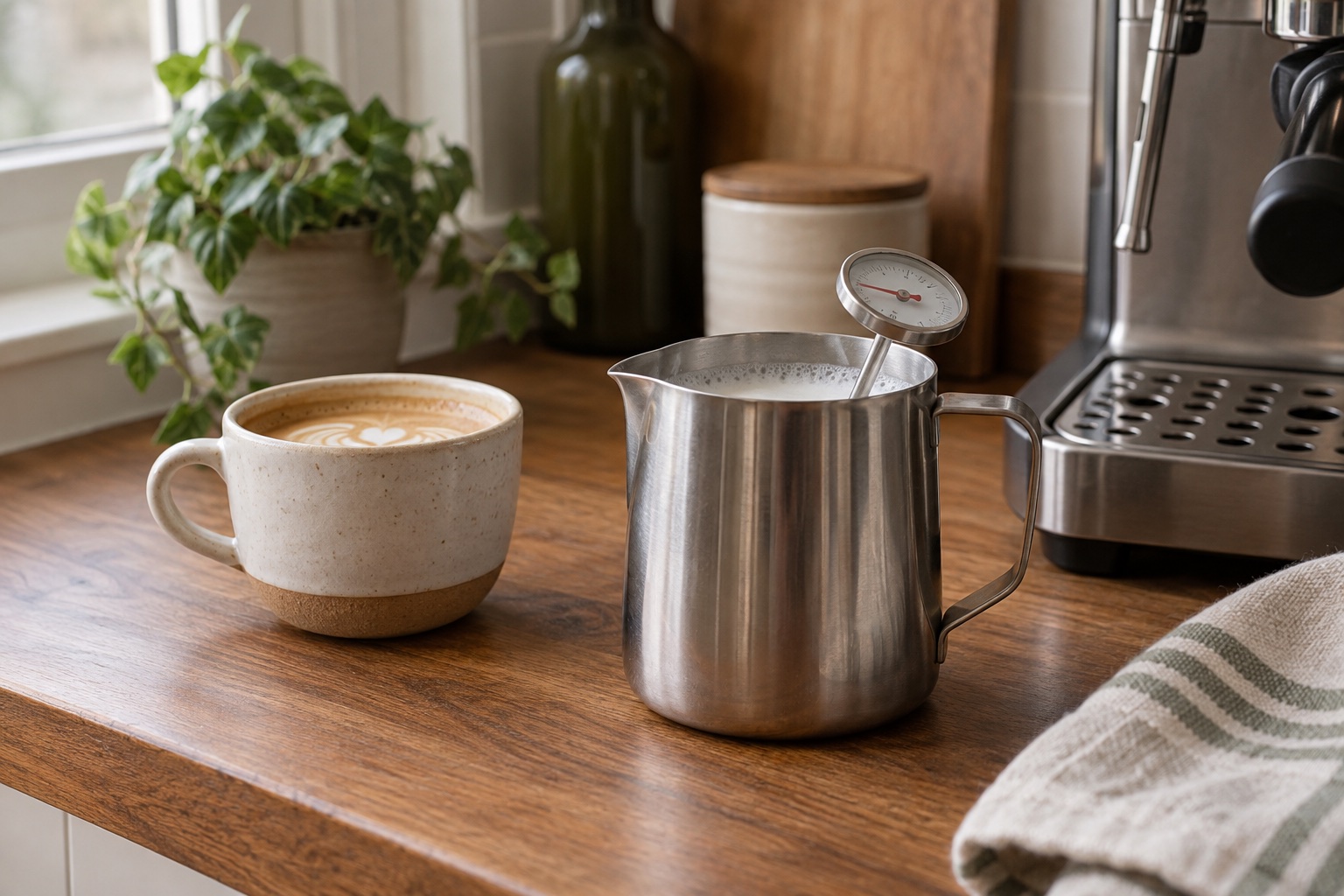
The milk’s starting temperature affects how long you have to build fine foam.
Overheating can flatten texture and give a cooked taste.
A hot jug exterior is a poor precision thermometer and can burn hands.
Temperature does not correct a weak coffee base or excessive milk volume.
“How hot should milk be for coffee?” sounds like it wants one magic number. In practice, the useful answer depends on whether you want integrated steamed milk, hot foam from a separate jug, or just a splash in black coffee. Temperature affects sweetness, texture and how quickly the drink is comfortable to drink; coffee strength and cup size affect the finished balance too.
What the 60–65°C target means
Sage’s milk-frothing guide advises roughly 60–65°C as a useful finishing range for steaming. It warns that excess heat can harm sweetness and foam quality. Use that range as a starting point for typical milk drinks, not as a compulsory target for every carton, recipe or machine. Sage’s own equipment manuals may specify other settings or an automatic sensor’s operating range.
The sensory test is valuable: if a drink is consistently too hot to enjoy, choose a cooler setting or stop earlier. If the milk tastes cooked and the surface looks thin, lowering the target is more promising than adding extra aeration. If the result is warm but watery, temperature might not be the main fault: insufficient aeration, poor circulation or the milk formulation may matter more. How to steam milk covers those mechanics.
Measure the liquid, not the jug
A clip-on or probe thermometer is useful during practice. Keep its sensor in the milk without pressing it against the jug bottom or wall, which can read differently from the liquid. Watch it while steaming and stop a little before the desired finished reading because heat can continue moving through the milk. Clean and dry the thermometer as its maker directs. Touching the outside of a jug may give a rough warning that it is hot, but it is not an accurate measurement method and can burn you.
Temperature-indicating jugs, including Sage’s Temp Control model, use their own display or indicator design; read the exact product instructions. Assisted-steam machines such as the Bambino Plus may stop against a selectable target. A self-heating jug frother runs a programmed cycle rather than offering the same manual control. These are alternatives, not purchases every household needs. A simple thermometer with an existing jug may be the cheapest learning tool.
Oat milk and other plant drinks
Do not assume every plant drink responds like dairy milk. Alpro’s Barista collection recommends 65°C for its oat, soya and coconut products and 60°C for almond. That is product-line guidance, not a universal rule for all oat milk. Oatly describes its Barista Edition as designed for microfoam but does not make every carton identical. Begin with the carton instructions, use cold drink, and change heat and aeration one at a time if foam fails. Our oat-milk troubleshooting guide helps separate formulation from technique.
Coffee-to-milk balance still matters
A small espresso with a large mug of milk can taste weak even at an ideal temperature. Taste the coffee base before changing milk heat. Shorten the milk drink, choose a stronger compatible recipe or use a different cup size if balance is the problem. Flat-white machine choices and why bean-to-cup coffee tastes weak address those separate decisions.
Frequently asked questions
Is 70°C automatically unsafe?
This page’s temperature discussion concerns flavour and foam, not a food-safety threshold. Do not use it to override storage or handling instructions for milk.
Can I use the jug by touch?
Only as a rough caution, not a precision target. A thermometer or reliable machine sensor is clearer, and hot metal can burn.
Does a heated frother reach the same texture as steam?
Not necessarily. Its heating cycle and whisking method differ from a wand; compare the frother options by texture and cleaning as well as heat.
Helpful products
Three ways to handle milk heat
A temperature-indicating jug, a steam-wand machine with assisted milk control and a self-heating frother represent different routes; check your existing equipment first.
SES003BSS0NEU1, 480ml
- 480ml
- Stainless steel
- Temperature indicator
Temperature-guided jug
Sage The Temp Control Jug
Best for: one or two milk drinks with a steam wand
A 480ml stainless milk pitcher with integrated temperature indicator strip and controlled-pour spout. First check whether your machine includes a jug.
Why it earns a place
- Temperature indicator
- 480ml
- Pouring spout
What to weigh up
- May duplicate an included jug
- Indicator needs care
Skip it if You have no steam wand or already have a suitable pitcher.
Check the official specification →Black Truffle, 54mm
- 54mm portafilter
- ThermoJet
- Automatic milk texturing
Fast heat and automatic milk
Sage Bambino Plus
Best for: a compact manual espresso route with supplied single- and dual-wall baskets
A compact ThermoJet machine with a 54mm portafilter and automatic milk texturing. The machine is capable, but a separate espresso grinder still determines how much control you have with its single-wall basket.
Why it earns a place
- Fast ThermoJet heat-up
- Single- and dual-wall baskets supplied
- Automatic steam wand
What to weigh up
- Separate grinder required
- Amazon colour/price variants fluctuate
- 54mm accessories need compatibility checking
Skip it if The current Amazon seller price is above your budget or you want a built-in grinder.
Check the official specification →MilkEasy Plus
- MilkEasy Plus
- Hot and cold modes
Heated jug frother
Lavazza MilkEasy Plus
Best for: hot or cold foam beside a pod or filter setup
An electric jug for heating or frothing dairy and plant drinks with a magnetic whisk.
Why it earns a place
- Hot and cold modes
- Plant-milk guidance
- Magnetic whisk
What to weigh up
- Separate appliance and cleaning
- Texture differs from steam
Skip it if You expect steam-wand-style microfoam.
Check the official specification →Sources and scope
The steaming range and overheating caution come from Sage’s frothing guide. Plant-drink temperatures are the maker-specific recommendations on Alpro’s UK Barista page. Product functions are described by Sage Temp Control Jug and Bambino Plus; exact settings should be checked on the current model manual.