
Troubleshooting · Automatic coffee
Why bean-to-cup coffee tastes weak—and how to fix it
Diagnose weak coffee from an automatic bean-to-cup machine by cup volume, aroma setting, beans, grind and cleaning before assuming the machine needs replacing.
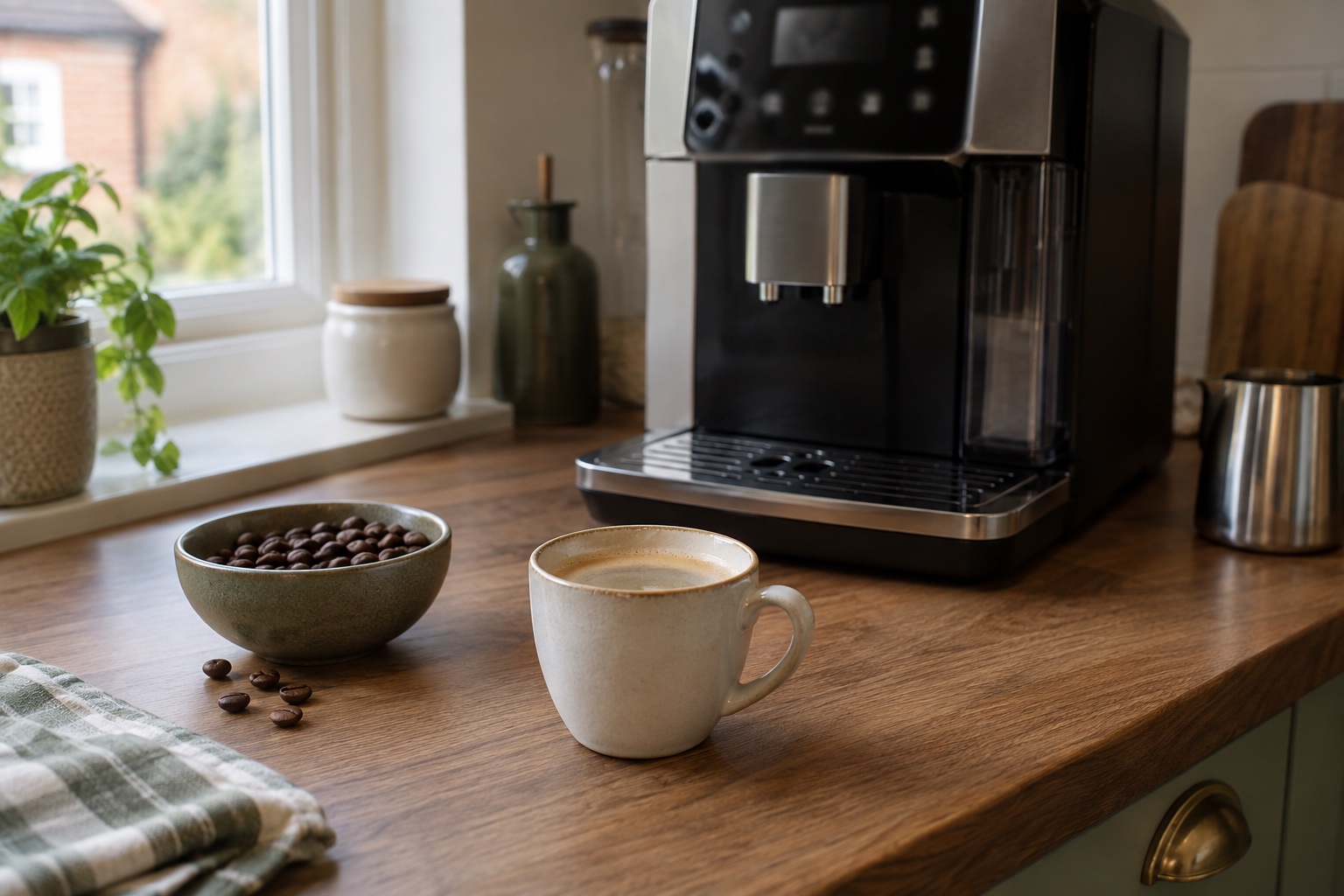
A long-drink button can dilute a small automatic dose.
Strength and grind controls do different jobs.
Some grinders must be adjusted while running; follow your manual.
Milk volume can hide a sound coffee base in a large cup.
“Weak” may mean watery, sour, thin, too much water for the coffee dose, or simply that a large milk drink has buried the coffee. Those are not the same fault. Before changing beans and grind together, make one short black coffee and taste it without milk or sugar. Compare it with the long drink you normally select. The difference gives you the first clue.
1. Check the drink volume
Many automatic machines offer espresso, coffee and long-drink programmes. They can pass different amounts of water through a similar or adjusted dose. If a short cup tastes good but the large one tastes thin, shorten the programmed water volume or use the machine’s approved long-coffee recipe if it employs a different brew cycle. Do not stretch a small espresso dose into a full mug and expect filter-coffee strength. For a longer black coffee, try a short coffee topped with hot water if your machine and preference allow, rather than continuing extraction indefinitely.
Record your old setting before changing it. If the drink becomes too intense or small, you can return. Our black-coffee bean-to-cup guide compares models by the actual black drink and controls, not the number of milk icons.
2. Increase the coffee dose or aroma setting
De’Longhi’s weak-coffee FAQ recommends increasing strength, which increases the amount of coffee ground on supported machines. The label may read strength, aroma or intensity. This is usually the next setting to try if a short drink is still weak. Do not assume it changes water volume too: some machines control those separately. If you already use maximum dose, look at beans, grind and maintenance rather than repeatedly pressing the same button.
3. Adjust grind carefully
A coarse grind can let water pass with too little extraction. De’Longhi suggests moving one notch finer at a time, during grinding for its supported machines, and referring to the exact manual. Do not twist a stopped grinder adjustment if the model forbids it. Make several drinks before judging a new setting because retained grounds may delay the effect. If flow slows dramatically or becomes bitter, go back one step. The grind-size guide explains the general extraction relationship; the machine’s numbered dial is model-specific and not interchangeable with another grinder.
4. Consider beans and cleaning
Stale beans lose aroma; a very light roast may taste different from the darker coffee you expect. Try a different fresh bag while keeping the machine settings stable. Avoid oily beans if the manufacturer cautions against them. Empty old grounds, rinse or clean the removable brew group if permitted, and run the model’s cleaning programme. A dirty machine may affect both flavour and flow, but descaling only treats mineral scale, not coffee oils. Use the cleaning checklist to separate those tasks.
If coffee is weak only after you add a large volume of milk, taste and adjust the milk-to-coffee balance instead. Choose a smaller cup, reduce milk volume or a stronger coffee base. Milk temperature influences the milk experience but cannot create a missing coffee dose.
When to seek service
If the machine suddenly grinds very briefly, barely dispenses coffee, leaks or shows an error, use the maker’s fault guidance. Do not reach into a powered grinder or dismantle its brew path beyond user-serviceable parts. A weak result despite fresh beans, sensible settings and proper cleaning may point to a fault that settings cannot solve.
Frequently asked questions
Is a darker roast always stronger?
It may taste more intense, but extraction, dose and water volume also matter. Compare one change at a time.
Should I immediately set the grinder to finest?
No. Move one permitted step at a time; too fine a setting can slow or choke flow.
Why is my latte weak but espresso fine?
The espresso may be diluted by milk or a large recipe volume. Reduce milk or use a stronger approved coffee setting before changing the grinder.
Helpful products
Two automatic machines with adjustable routines
These existing models illustrate aroma, volume and grind choices. The cards are not replacements to buy before checking the settings on your current machine.
ECAM22.110.B
- ECAM22.110.B
- Traditional milk frother
Manual-milk automatic
De’Longhi Magnifica S
Best for: fresh-bean espresso with a manual milk wand
A built-in grinder and automatic brewer, paired with a traditional milk frother. Milk still takes hands-on work.
Why it earns a place
- Built-in grinder
- Manual milk control
- Two-cup dispensing
What to weigh up
- Milk is not one-touch
- Regular brew-unit and wand care
Skip it if You want one-touch milk drinks.
Check the official specification →ECAM220.61.GB
- 250g bean container
- Four one-touch recipes
- ECAM220.61.GB
One-touch bean-to-cup
De’Longhi Magnifica Start
Best for: a household that wants fresh beans and automatic milk drinks
This exact Magnifica Start variant includes an integrated grinder and LatteCrema Hot automatic milk system, with one-touch espresso, coffee and latte macchiato. It removes daily puck preparation but adds milk-system cleaning.
Why it earns a place
- Integrated grinder
- Automatic milk drinks
- Removable cleaning components
What to weigh up
- Large counter footprint
- Milk system needs regular cleaning
- Less direct control than separate equipment
Skip it if You enjoy dialling in separate grinder and espresso settings, or have a very shallow counter.
Check the official specification →Sources and scope
The adjustment sequence draws on De’Longhi’s UK weak-coffee FAQ, its grinder-setting guidance and its explanation of grind versus taste selection. Exact controls differ by model; follow your manual.