
Care · Espresso
How to clean an espresso machine: daily to deep-clean
A practical cleaning routine for a UK home espresso machine: portafilter, basket, group head, drip tray and steam wand, plus cleaning-cycle and descaling distinctions.
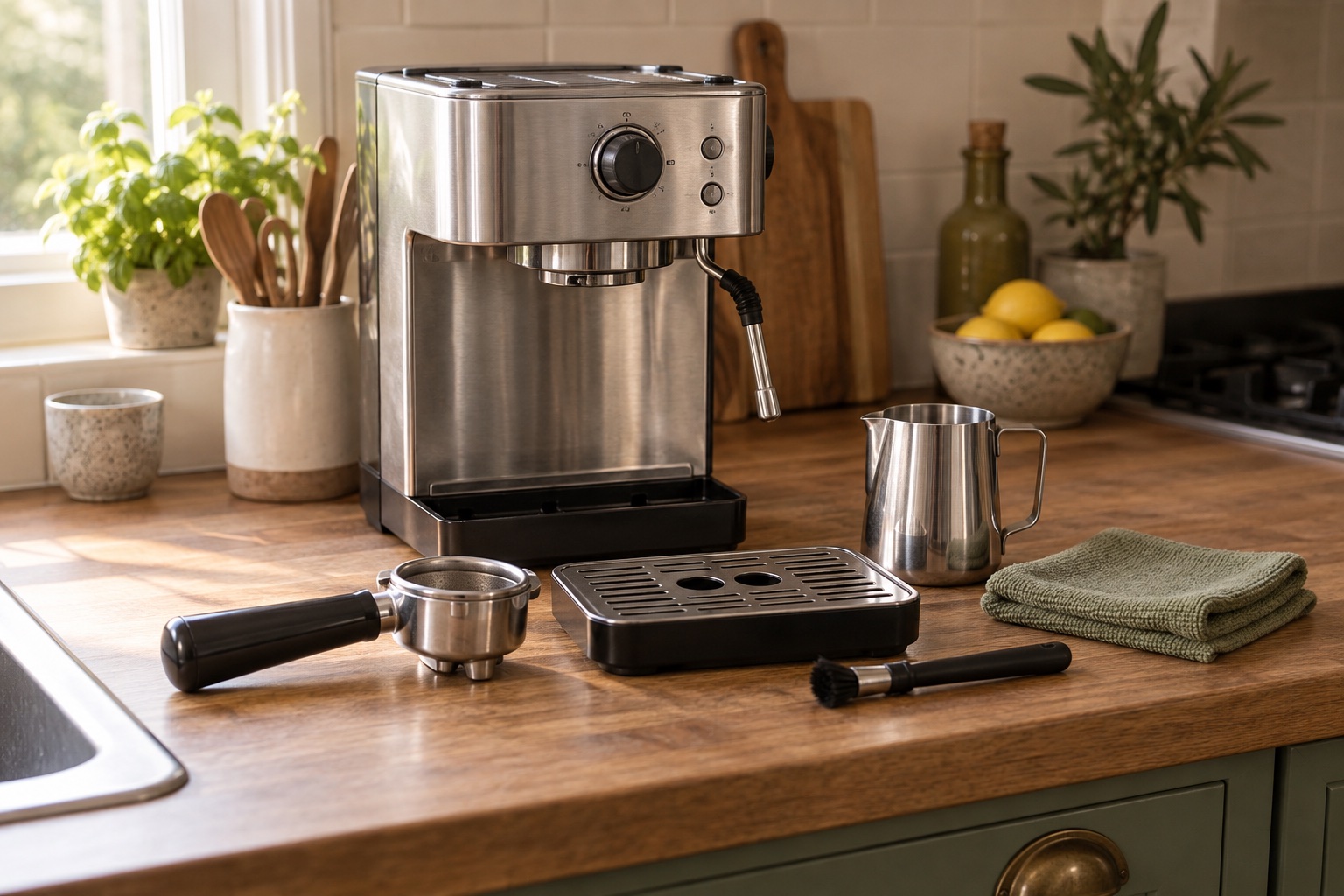
Turn off and let hot parts cool before disassembly.
Keep water away from plugs, controls and electrical housing.
Milk-contact parts need immediate model-approved cleaning.
Backflushing is not appropriate for every machine.
A good home espresso routine is mostly small, immediate jobs. Dried coffee oils are harder to remove than fresh residue; dried milk is an avoidable hygiene problem. The exact cleaning method still depends on the machine. A compact pressurised-basket appliance, a Sage with an automated cleaning cycle and an E61-style machine should not all be given the same backflush instruction.
After every espresso session
Knock out the spent puck after brewing and check the basket holes for trapped grounds. Rinse the basket and portafilter according to your manual, then dry them before reassembly or storage. Do not scrape a coated part with metal. Wipe loose grounds from the group-head rim with a soft cloth or approved brush once the hot area is safe to touch. If your manual recommends a brief water flush, use its method; do not leave a hot group running unattended.
Empty, rinse and dry the drip tray before coffee residue and standing water build up. Clean the outside with a damp, not dripping, cloth. Never immerse the machine body or pour water into buttons and sockets. If the appliance has a removable water tank, wash it at the interval and by the method the manufacturer specifies.
Steam wand and milk system
Wipe the wand immediately after steaming with a dedicated clean damp cloth. Purge only as the manual instructs, directing hot steam or water safely away from hands. Let it cool before removing any authorised tip or sleeve. A blocked wand needs the model's cleaning route, not a pin forced into an orifice. An automatic milk carafe has more parts and may have a required rinse after every drink; consult its diagram and dishwasher guidance.
Do not use the same cloth for the drip tray and milk wand. If milk has sat in a tube or carafe, clean the full food-contact path as directed before the next drink. This is not a job a water-circuit descaler can do.
Weekly or periodic deeper care
Inspect the shower screen and gasket area for residue. Some machines permit a group brush or a removable screen; others do not. Follow the model instructions before unscrewing anything. Wash removable drip-tray grids, baskets and approved accessories with the cleaner and temperature permitted by their materials. Dry completely.
If the machine offers an automatic cleaning cycle, use only the specified tablet or cleaner and follow the on-screen sequence. Sage's Barista Express cleaning tutorial is a good example of a defined model procedure, not a universal technique. Some traditional machines use a blind basket and backflush; many entry machines do not support this. Never attempt it merely because another espresso owner does.
Cleaning versus descaling
Cleaning removes oils, grounds and milk. Descaling removes mineral deposits from the water circuit. Sage's manual treats these as separate procedures. If you have a scale prompt, follow our descaling overview and then the exact manual. Do not put a cleaning tablet in the tank unless the manufacturer explicitly instructs it; do not put descaler in a portafilter.
When to stop and seek support
A damaged cable, burning smell, electrical trip, water leaking into the casing or steam from an unexpected place is not routine dirt. Stop using the machine, disconnect safely if possible and follow the manufacturer's service route. Repeatedly running detergent or descaler can make a fault harder to diagnose.
For an easy routine across machine types, save the coffee-machine cleaning checklist. If the shot is weak despite a clean basket, our watery espresso diagnosis covers recipe and grind before purchase.
Frequently asked questions
Should I wash the portafilter after every shot?
Clear the puck and rinse or wipe it as your model permits. Dry it, especially before preparing the next dose. Check whether your specific portafilter handle or basket is dishwasher-safe rather than assuming.
Can I backflush a beginner espresso machine?
Only if the manual explicitly supports a blind basket and backflushing. A cleaning-cycle video for another model is not proof of compatibility.
Will descaler clean oily coffee taste?
No. Use the approved coffee-oil cleaning path for the relevant part. Descaler addresses mineral scale.
Helpful products
A model-specific oil-cleaning supply
Sage's group-head tablets belong only in listed compatible cleaning cycles. They do not descale water passages.
SCC201NEU0ZEU1, six tablets
- Six tablets
- Group-head cleaner
- SCC201NEU0ZEU1
Cleans coffee oils, not limescale
Sage Group Head Cleaner
Best for: compatible Sage espresso machines with a supported cleaning cycle
Sage’s own group-head cleaning tablets for listed compatible espresso machines. They target coffee oils in a cleaning cycle; they do not replace a mineral descaler.
Why it earns a place
- Official Sage supply
- Specific cleaning purpose
- Six-dose pack
What to weigh up
- Not a descaler
- Compatibility varies
- Cycle differs by model
Skip it if You are trying to remove scale or your model has no compatible cleaning cycle.
Check the official specification →Sources and scope
Cleaning-cycle and descaling separation are documented in Sage's Barista Express manual. Sage's cleaning-cycle tutorial illustrates why the model procedure matters. This guide avoids universal backflush or disassembly steps.