
Buying guide · Beginner espresso
Best espresso machines for beginners in the UK
A beginner espresso-machine guide comparing the De’Longhi Stilosa and Dedica, with an honest look at Sage Bambino and the grinder, milk and learning costs.
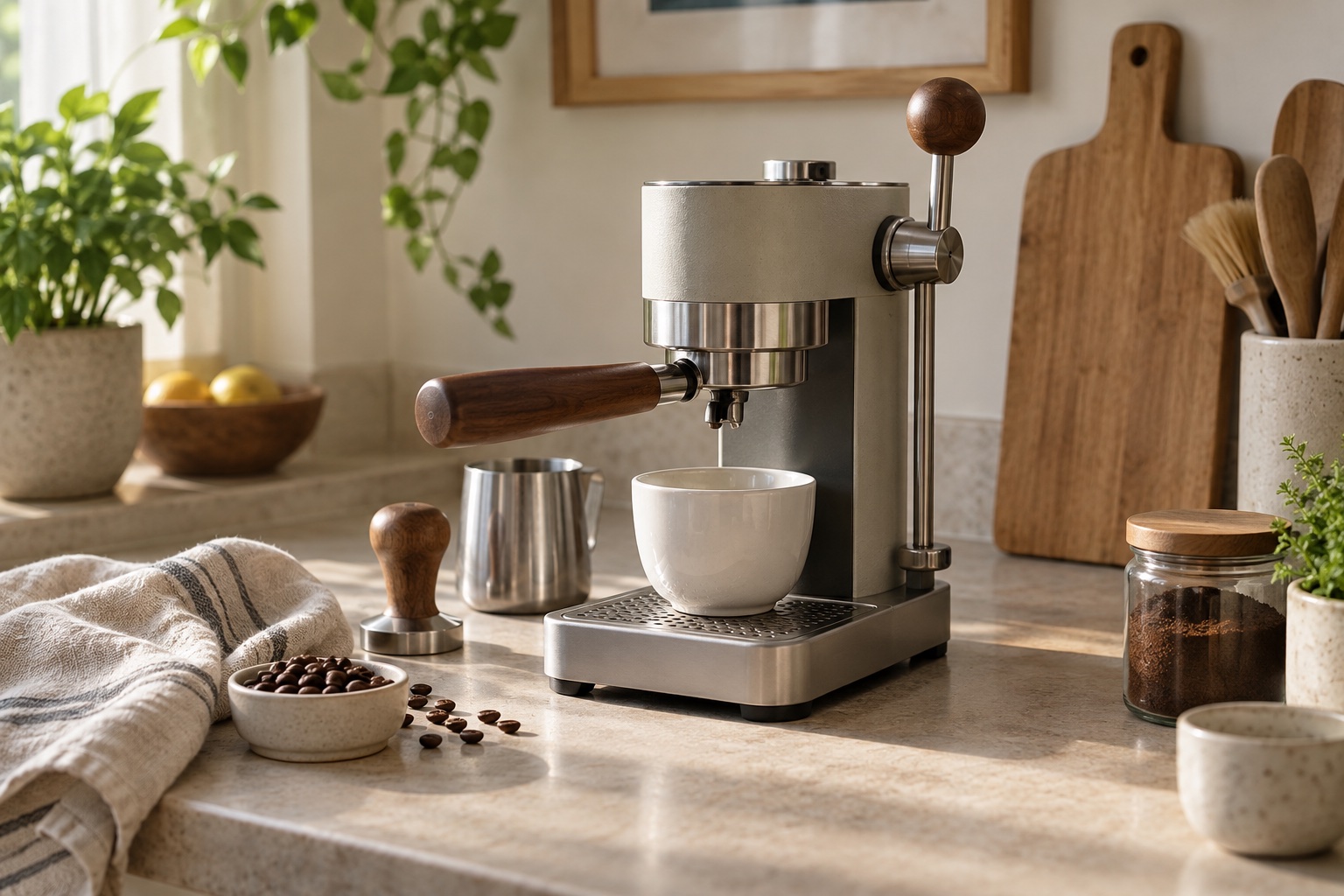
Pressurised baskets forgive coarse grinding; single-wall baskets reveal technique and grinder quality.
Manual steam asks for practice and cleaning after every use.
Avoid pairing a capable machine with a blade or filter-only grinder.
A simple machine teaches the workflow; automation removes parts of it.
The useful shortlist
Two beginner machines, plus the grinder that changes the result
The third card is deliberately a grinder, not a third espresso machine: a manual setup bought without a realistic grinding plan is an incomplete purchase.
EC685.M
- 149 × 330 × 305mm
- 1.1L water tank
- EC685.M
Slim manual espresso choice
De’Longhi Dedica Style
Best for: a narrow worktop and someone willing to prepare and steam manually
At about 15cm wide, the Dedica makes manual espresso possible on a narrow counter. Its Thermoblock, programmable cup quantities and adjustable drip tray are useful; a separate grinder is still needed for fresh-ground coffee.
Why it earns a place
- About 15cm wide
- Manual steam wand
- Ground coffee or ESE pods
What to weigh up
- No built-in grinder
- Pressurised baskets limit fine espresso control out of the box
Skip it if You expect one-touch coffee or milk, or cannot spare space for a grinder.
Check the official specification →EC260.BK
- 205 × 343 × 285mm
- 1L water tank
- EC260.BK
Lowest-cost manual route
De’Longhi Stilosa
Best for: a first attempt at milk drinks without a large machine purchase
A simple dial-operated manual machine with a stainless-steel boiler, 1L tank and steam wand. The low entry price leaves more of the budget for an appropriate grinder, but the workflow is entirely hands-on.
Why it earns a place
- Low entry cost
- Manual milk frother
- Removable two-tier drip tray
What to weigh up
- Manual dial and simple controls
- No grinder or automatic milk routine
Skip it if You want automatic milk, a timer display or a machine that makes the drink without preparation.
Check the official specification →ZCG495 / 495W-230V-G
- 40 settings
- 40mm steel burrs
- 230V UK model
Best fit for most homes
Baratza Encore ESP
Best for: households switching between espresso and filter
Its adjustment range is deliberately divided between finer espresso settings and broader filter settings, so it is the most convincing one-grinder answer here for a mixed routine.
Why it earns a place
- Dedicated espresso and filter ranges
- Simple hopper adjustment
- Dosing cup included
What to weigh up
- Manual dosing rather than a timed display
- Plastic-led body
Skip it if Timed portafilter dosing is the feature that would make everybody else in the house use the setup.
Check the official specification →| Choice | Main strength | Milk | Grinder | Main limitation |
|---|---|---|---|---|
| Dedica Style EC685.M | Slim Thermoblock machine | Manual wand | Separate | Still hands-on |
| Stilosa EC260.BK | Low machine entry cost | Manual frother | Separate | Basic controls |
| Sage Bambino BES450 | Fast heat and 54mm portafilter | Manual wand | Separate | Higher total spend; no verified Amazon card |
The beginner mistake is to choose a machine by the pressure printed on its box. Espresso depends on the whole chain: beans, grind, dose, basket, puck preparation, water and cleaning. An entry machine can make satisfying milk drinks with a forgiving pressurised basket; a much more expensive machine can disappoint when paired with an unsuitable grinder. Decide whether you want to learn manual espresso at all. If you primarily want a button and a latte, read bean-to-cup versus manual espresso before purchasing.
Dedica Style EC685.M: the compact first machine
The Dedica has three practical advantages for a novice: a narrow 149mm body, Thermoblock heating and a straightforward manual wand. The two-tier tray accepts taller cups once the lower tray is removed. It uses ground coffee or ESE paper pods, so there is a fallback while you learn to grind. That does not mean pods reproduce a dialled-in freshly ground shot; it simply lowers the barrier to using the machine.
Its most important hidden measurement is the setup width. Place a portafilter on the counter, add a grinder, and leave elbow room to tamp. A nominal 15cm-wide appliance can consume far more useful worktop once the complete routine is laid out. The small-kitchen guide includes a simple measurement method.
Start with the supplied basket rather than buying a bottomless portafilter immediately. Make repeatable drinks, learn to purge and wipe the steam wand, then decide if a single-wall basket is worthwhile. The basket change increases the demand on your grinder.
Stilosa EC260.BK: the least expensive credible manual start
The Stilosa is a simpler, wider dial-operated machine. De’Longhi lists a stainless-steel boiler, 1L removable tank, milk frother and two-tier drip tray. It covers the basic operations without making the appliance purchase the whole budget. That matters: the money saved can buy a grinder that gives useful espresso adjustment, or simply reduce the risk if manual espresso is a hobby you may not keep.
The trade-off is less guidance and less convenience. You still prepare the coffee, control the shot, steam milk, empty the tray and follow the descaling schedule. A low price does not make the process automatic. If all you want is a reliable morning caffeine button, the Stilosa is probably the wrong machine even when it is affordable.
Where the Sage Bambino fits
Sage’s Bambino BES450 specification lists a 54mm portafilter, supplied single- and dual-wall baskets, a manual steam wand and a ThermoJet system advertised as ready in three seconds. These make it a well-equipped learning machine, particularly for someone who expects to progress beyond pressurised baskets. The 54mm accessories and clearer espresso pathway are genuine reasons to consider it.
It is not an automatic winner. The machine alone is a higher spend, and you still need an espresso-capable grinder. We have not placed an Amazon product card here because we could not verify a normal UK Amazon listing for the exact BES450 today. Compare the manufacturer’s current UK offer with other authorised retailers rather than buying an imported listing or a similarly named accessory by mistake.
The grinder decision beginners should make first
With pressurised baskets, pre-ground coffee or a broad-step grinder can produce a drink while you learn. With a non-pressurised basket, small grind adjustments are the primary tool for controlling flow. The Baratza Encore ESP’s fine espresso zone makes it a sensible separate grinder for a beginner who also brews filter. It is not the only solution: our espresso grinder guide compares timed and manual alternatives. If a grinder makes the total cost uncomfortable, delay the machine purchase or stay with the forgiving basket until your budget is ready.
A first-week learning sequence
On day one, wash and prime the machine exactly as its manual instructs. Learn where water, drip tray and spent grounds go. Then make the same drink repeatedly rather than changing beans, dose and grind at once. For milk drinks, steam a small amount, purge and wipe the wand immediately, and observe whether the drink remains pleasant when the foam settles.
If a shot is fast and watery, check coffee freshness, dose and grind rather than immediately buying a new basket. If it barely flows, back off the grind before declaring a machine defect. Record your starting setting and read our grind-size guide for a more systematic adjustment routine. Never force a blocked or incorrectly locked portafilter; follow the manual’s troubleshooting and safety steps.
What a beginner setup really costs
Include beans, a capable grinder if buying whole beans, scales, a cloth and cleaning supplies. A milk jug is needed if one is not included. A tamper may be supplied but can be basic; use it before upgrading. Decorative distribution tools can wait. Our beginner setup guide provides three complete routes, and the budget split shows why machine-only shopping leads to poor decisions.
Frequently asked questions
Is a pressurised basket bad for beginners?
No. It creates some of the resistance at the basket outlet and is forgiving of less precise grinding. It does not teach every skill needed for a single-wall basket, but it helps you learn filling, handling and milk without changing everything at once.
Can I use supermarket ground coffee?
With the supplied pressurised basket, often yes, subject to the machine manual and the coffee’s grind. It will not give the same control as fresh grinding. A non-pressurised basket usually demands a more precise, fresh grind.
Do I need a 58mm portafilter?
No. Portafilter diameter alone is not a quality score. The Dedica and Bambino use smaller systems for different reasons. Accessory compatibility and the actual basket/grinder combination matter more to a first setup.
Is a built-in grinder easier?
It reduces the number of boxes and sometimes the steps, but an integrated manual espresso machine still requires you to prepare the puck. A fully automatic bean-to-cup machine removes more of that work. Be precise about which kind of “built-in” you mean.
How we chose
We matched entry manual machines to a realistic total setup and checked specifications against De’Longhi’s Dedica, Stilosa and Sage’s Bambino. Check current retailer price, stock and included accessories at purchase.