
Water · UK guide
Coffee water hardness in the UK: what to check at home
Find UK tap-water hardness, convert common units and match the result to your coffee machine's own setting instructions.
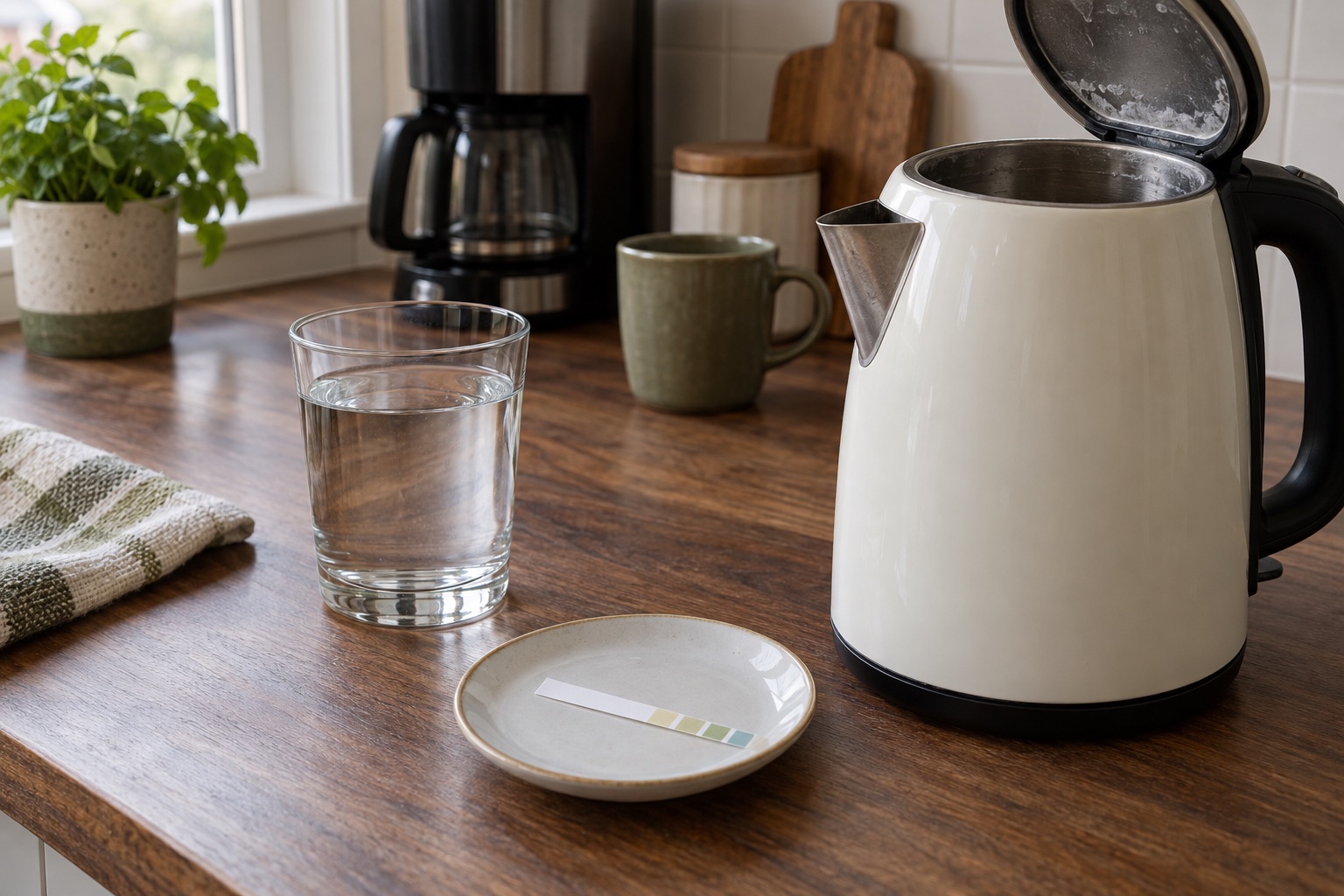
Supplier results are local estimates; a tap test reflects your actual supply.
Hardness and total dissolved solids are not the same measurement.
A water filter may reduce scale exposure but needs proper replacement.
Descaling remains tied to the model's prompt and manual.
“Is UK tap water too hard for coffee?” is the wrong shape of question. UK water differs by supply zone, and a change of home or supplier may change the water used in the same brewer. Many coffee machines have a hardness setting specifically so their maintenance prompt can reflect that difference.
Find the water that reaches your kitchen
Use Water UK's supplier finder, then enter your postcode on the supplier's water-quality page. For example, Thames Water provides a postcode-based water-quality lookup and explains local hardness. If you use a private supply, contact the relevant authority or test that supply. A regional “hard-water area” map is less useful than your actual postcode and tap.
Check the unit reported. A supplier may show milligrams per litre as calcium carbonate, a degree scale or a plain soft/medium/hard category. These are not interchangeable numbers. Follow your machine manual's conversion chart if it asks for a level rather than a value. If the machine came with a hardness strip, use it exactly as directed, note the result and set the control. Strips can age or be read incorrectly; repeat a surprising result.
Convert the unit before choosing a machine level
Here is a worked example of 180mg/L of total hardness expressed as calcium carbonate (CaCO₃). This is an illustrative input, not a reading for your postcode. United Utilities' conversion factors turn that one input into other common units:
| Unit shown by a manual | Calculation from 180mg/L as CaCO₃ | Approximate result |
|---|---|---|
| mg/L as CaCO₃ | Keep the supplied value | 180mg/L |
| French degrees (°f) | 180 × 0.1 | 18°f |
| German degrees (°dH) | 180 × 0.056 | 10.1°dH |
| Clarke degrees (°e) | 180 × 0.07 | 12.6°e |
The Drinking Water Inspectorate's categories place 180mg/L as CaCO₃ in its moderately hard range. That category is not automatically a setting labelled “medium” on your coffee machine. Use the converted number only with the exact model's stated boundaries. If the supplier reports mg/L of calcium instead of mg/L as CaCO₃, do not enter 180 as though the units were the same; look for its total-hardness figure or use the machine's prescribed strip.
The decision path is short: use a supplied strip if the manual specifies strip colours; use the supplier's number only after matching units if the manual specifies a numeric range; and enter a separate “filter installed” option if your model has one. If you fill from a jug filter or another tap, base the setting on the water that actually enters the tank. Our water-hardness testing guide explains how to check that supply, while tap versus filtered water helps decide whether treatment is worthwhile.
Why hardness matters to machines
Calcium and magnesium minerals can form deposits as water is heated. Scale may reduce flow or heating performance over time, hence a machine's descale programme. But a slow shot is not automatically scale: coffee grind, dose, basket blockage, pump issue and recipe also change flow. Descale at the right interval rather than treating every symptom with acid.
For brewed coffee, minerals also influence extraction and taste. “Zero minerals” is not automatically a better drink, and “hard water” does not predict one precise flavour. The Specialty Coffee Association's discussion of water and acidity explains the interaction is more complex than a single hardness number.
Hardness, TDS and filtration are different
A handheld TDS meter estimates overall dissolved ionic material by conductivity. It cannot tell you how much of that is the calcium and magnesium that the machine's hardness setting concerns. Do not enter a TDS reading as a hardness value. Likewise, a jug filter, in-tank cartridge and bottled water all vary in composition and lifespan. Check the filter's compatibility, change interval and whether the machine needs a “filter installed” setting.
If you use bottled water, check the label's mineral analysis and the machine maker's advice. Not every bottled water is soft, and a low-mineral product might not suit every appliance or taste. Avoid making a permanent switch on the strength of one cup.
A useful five-minute setup
- Save your supplier's postcode result or a photo of the test strip.
- Find the exact machine manual's hardness-setting table.
- Set the level; record whether a compatible filter is installed.
- Replace that filter at its stated interval and update the setting if circumstances change.
- Respond to the model's descaling prompt with its approved method.
This small record is more valuable than a universal “descale every 30 days” reminder. If the machine asks for a cleaning cycle as well, remember that removes coffee oils, not scale; see our cleaning checklist.
Frequently asked questions
Is London water hard?
It can be, but check your supply postcode rather than assuming all London addresses share one value. The relevant answer is the water entering your own tank.
Can I use a TDS meter instead of a hardness strip?
Not directly. TDS is a broader estimate and does not identify hardness minerals. Use the test and units required by the machine.
Will a filter remove all need to descale?
Do not assume so. A model's instructions and prompts still apply, and an overdue filter may not perform as intended.
Sources and scope
Water UK directs households to local suppliers; the Drinking Water Inspectorate gives hardness ranges, and United Utilities provides the unit-conversion factors used in the illustrative table. Thames Water explains its local context. The flavour discussion is informed by the SCA's water article. No single hardness figure is asserted for the whole UK.