
Choosing a setup · Beginner route
Home coffee setup for beginners: three complete routes
Build a complete beginner home coffee setup in the UK for filter, manual espresso or bean-to-cup drinks without buying unnecessary accessories.
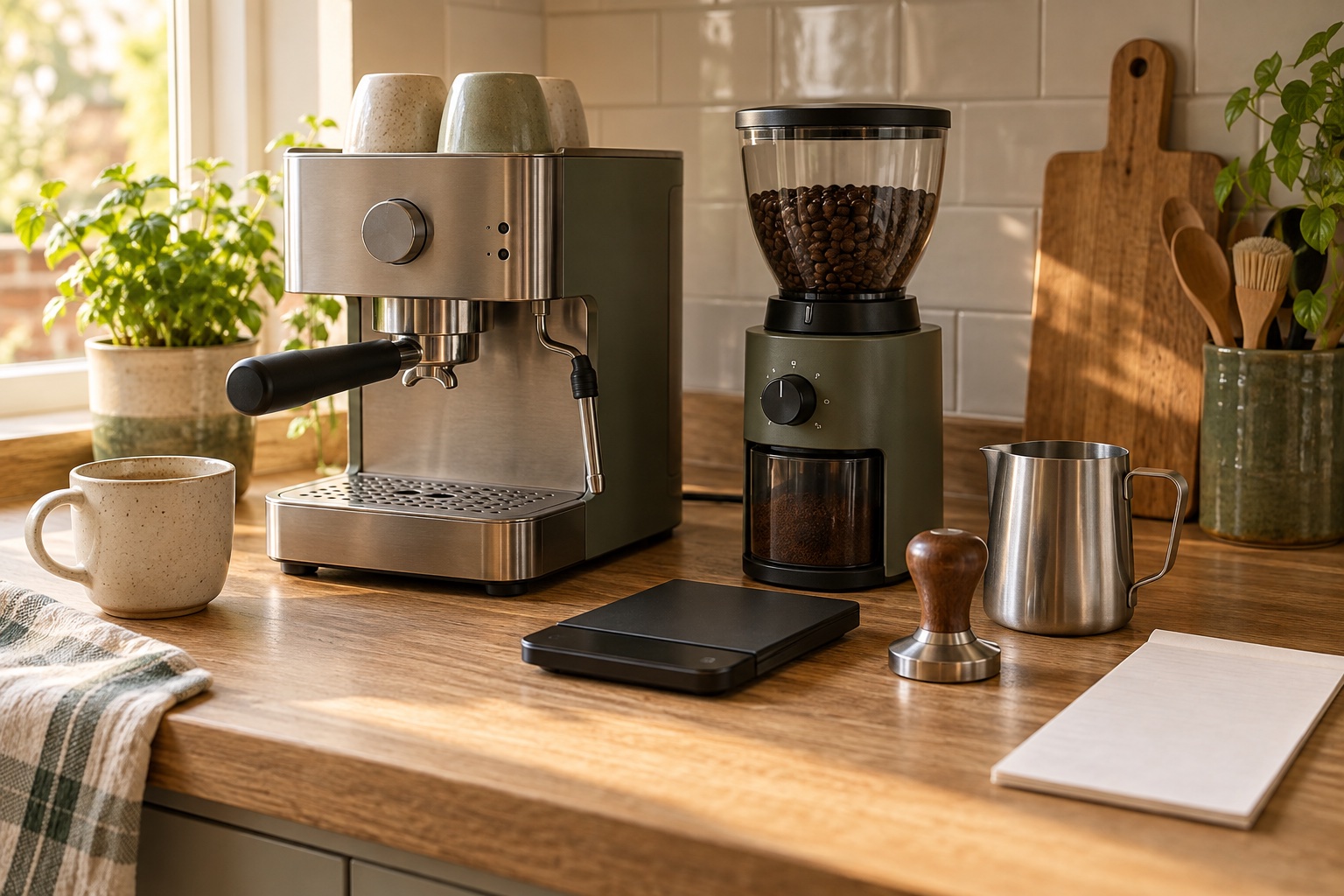
Choose the usual drink before choosing a machine brand.
Set one budget for the working setup, not just the main appliance.
Use supplied accessories until a specific limitation becomes clear.
Learn one repeatable recipe before changing beans, grind and dose together.
A beginner setup is not a shopping basket full of coffee gadgets. It is a repeatable path from coffee and water to the drink you want, with a realistic place to clean and store each item. Start by choosing one of the routes below. If the choice between filter, pods, bean-to-cup and manual espresso is still open, read which coffee machine should I buy? first.
Route one: filter coffee for mugs and several people
The minimum is a brewer, correct paper filters where required, suitable ground coffee and water. A machine such as the Melitta Look V Timer can prepare a jug at a scheduled time. Start with a smaller batch than the maximum, learn how much fits your mugs, and discard old coffee rather than leaving it to cook on a hotplate.
You can buy pre-ground filter coffee to begin. If you enjoy the method, add a filter-capable burr grinder and whole beans later. A grinder gives control over drawdown and lets coffee stay whole until brewing. It is not necessary to buy an expensive espresso grinder for this route. Keep paper filters and a simple cleaning cloth in the actual station so the routine remains easy.
If only one person makes one cup, consider a manual dripper or cafetière from our brewing section before giving a machine permanent worktop space.
Route two: manual espresso for a hands-on hobby
Begin with a machine, suitable grinder, beans, scales and basic cleaning tools. Add a milk jug if you make milk drinks and the machine does not include one. The Stilosa EC260.BK keeps machine cost low; the Dedica Style is narrower. Both require you to prepare and clean a portafilter. A grinder such as the Baratza Encore ESP offers close espresso adjustment while still covering filter brewing.
Do not upgrade every accessory on day one. Use the supplied basket and tamper, learn a consistent dose and observe the flow. A pressurised basket can be a sensible first stage while you learn handling and milk. If you later move to a single-wall basket, the grinder becomes more demanding. Our espresso grind-size guide and beginner espresso machine comparison explain why.
Allow a physical place to knock out grounds and wipe the wand. Cleaning is part of the workflow, not a later accessory category. Follow the machine manual for first use, backflushing if applicable and descaling.
Route three: bean-to-cup for fresh beans and less daily work
A fully automatic model includes a grinder and internal brew mechanism. The exact Magnifica Start ECAM220.61.GB also includes automatic milk. The minimum shopping list is the machine, whole beans, water and manufacturer-specified care supplies. You do not need a separate grinder, portafilter tamper or distribution tools.
This route transfers work from drink preparation to refilling and cleaning. Empty the spent-grounds container, rinse components as instructed, and perform the milk clean after milk use. A household that values one-touch drinks may find that easier than repeated manual pucks. Someone who wants to change dose and extraction directly may prefer separate equipment. Our bean-to-cup versus espresso guide goes deeper.
What about a pod starter setup?
If the strongest constraint is space and speed, the Essenza Mini plus compatible Original capsules is a complete short-coffee setup. Add a frother only if milk drinks are a regular requirement. Calculate capsule use before choosing it for a busy household; the pod versus bean-to-cup guide shows how.
The first purchases that can wait
A bottomless portafilter, precision basket, elaborate distribution tools, premium milk pitcher and large bean storage system can all wait until a basic routine exposes a real problem. A simple scale is useful because it makes changes measurable; a cupboard full of accessories does not make the coffee better automatically. Good beans, the right grind and a clean machine usually deserve attention first.
Set up your kitchen for the routine
Put the equipment where you can reach water, empty waste and clean safely. Check the counter’s depth and height under cupboards. Avoid blocking a socket or placing electrical equipment where splashes are likely. Leave room for a hot portafilter and milk jug. If each drink requires pulling five items from distant cupboards, a theoretically compact setup may become a frustrating one. See the small-kitchen guide.
A first-month learning plan
Week one: use one coffee and one recipe; learn the appliance’s fill, brew and clean cycle. Week two: adjust grind in small steps if you have a grinder, recording the result. Week three: try a second coffee only if the first routine is stable. Week four: identify the actual constraint—perhaps slow hand grinding, awkward water access or poor milk texture—before spending on upgrades. This sequence is an editorial method, not a claim that every drink will be perfected in four weeks.
Frequently asked questions
What do I need for espresso at home besides the machine?
For fresh whole beans, an espresso-capable grinder, beans, water, scales and cleaning supplies. A milk jug is useful for milk drinks. The supplied basket and tamper are enough to start; check the exact machine’s box contents.
Can I start with pre-ground coffee?
Often with a supplied pressurised basket, subject to the machine manual. It is a useful starting route but provides less control over freshness and flow than grinding beans for each drink.
Should I buy a bean-to-cup machine as a beginner?
Yes if you want fresh beans without learning manual puck preparation and accept its purchase price, footprint and care routine. No if the craft of espresso is what attracted you in the first place.
How much should I spend on the grinder?
Enough to suit the brew method. Traditional espresso requires closer adjustment than a forgiving filter machine. Our grinder budget guide and espresso budget split help allocate the total.
Helpful products
The pieces that define each route
A filter machine, an entry manual machine, an espresso-capable separate grinder and an automatic bean-to-cup are examples—not items every beginner should buy together.
6766591 UK
- 1.25L tank
- 1×4 paper filters
- 6766591 UK
Best batch-filter routine
Melitta Look V Timer
Best for: households making several mugs of black filter coffee
A programmable glass-jug filter machine with a removable 1.25L tank, 1×4 filters and AromaSelector. It makes a batch with little active work but needs ground coffee and a separate grinder if you buy whole beans.
Why it earns a place
- Programmable start
- Removable water tank
- Up to ten maker-size cups
What to weigh up
- Not espresso
- Glass jug and hotplate require timely drinking
- Separate grinder for fresh beans
Skip it if You mainly drink espresso or make a single small cup each time.
Check the official specification →EC260.BK
- 205 × 343 × 285mm
- 1L water tank
- EC260.BK
Lowest-cost manual route
De’Longhi Stilosa
Best for: a first attempt at milk drinks without a large machine purchase
A simple dial-operated manual machine with a stainless-steel boiler, 1L tank and steam wand. The low entry price leaves more of the budget for an appropriate grinder, but the workflow is entirely hands-on.
Why it earns a place
- Low entry cost
- Manual milk frother
- Removable two-tier drip tray
What to weigh up
- Manual dial and simple controls
- No grinder or automatic milk routine
Skip it if You want automatic milk, a timer display or a machine that makes the drink without preparation.
Check the official specification →ZCG495 / 495W-230V-G
- 40 settings
- 40mm steel burrs
- 230V UK model
Best fit for most homes
Baratza Encore ESP
Best for: households switching between espresso and filter
Its adjustment range is deliberately divided between finer espresso settings and broader filter settings, so it is the most convincing one-grinder answer here for a mixed routine.
Why it earns a place
- Dedicated espresso and filter ranges
- Simple hopper adjustment
- Dosing cup included
What to weigh up
- Manual dosing rather than a timed display
- Plastic-led body
Skip it if Timed portafilter dosing is the feature that would make everybody else in the house use the setup.
Check the official specification →ECAM220.61.GB
- 250g bean container
- Four one-touch recipes
- ECAM220.61.GB
One-touch bean-to-cup
De’Longhi Magnifica Start
Best for: a household that wants fresh beans and automatic milk drinks
This exact Magnifica Start variant includes an integrated grinder and LatteCrema Hot automatic milk system, with one-touch espresso, coffee and latte macchiato. It removes daily puck preparation but adds milk-system cleaning.
Why it earns a place
- Integrated grinder
- Automatic milk drinks
- Removable cleaning components
What to weigh up
- Large counter footprint
- Milk system needs regular cleaning
- Less direct control than separate equipment
Skip it if You enjoy dialling in separate grinder and espresso settings, or have a very shallow counter.
Check the official specification →Sources and method
The routes are based on the documented features of Melitta Look V Timer, De’Longhi Stilosa, Dedica Style and the exact Magnifica Start variant.