
Troubleshooting · Oat milk
Why your oat milk will not froth—and what to change first
Diagnose thin, large-bubble or separating oat milk in a steam wand, electric frother or automatic carafe without blaming the machine too quickly.
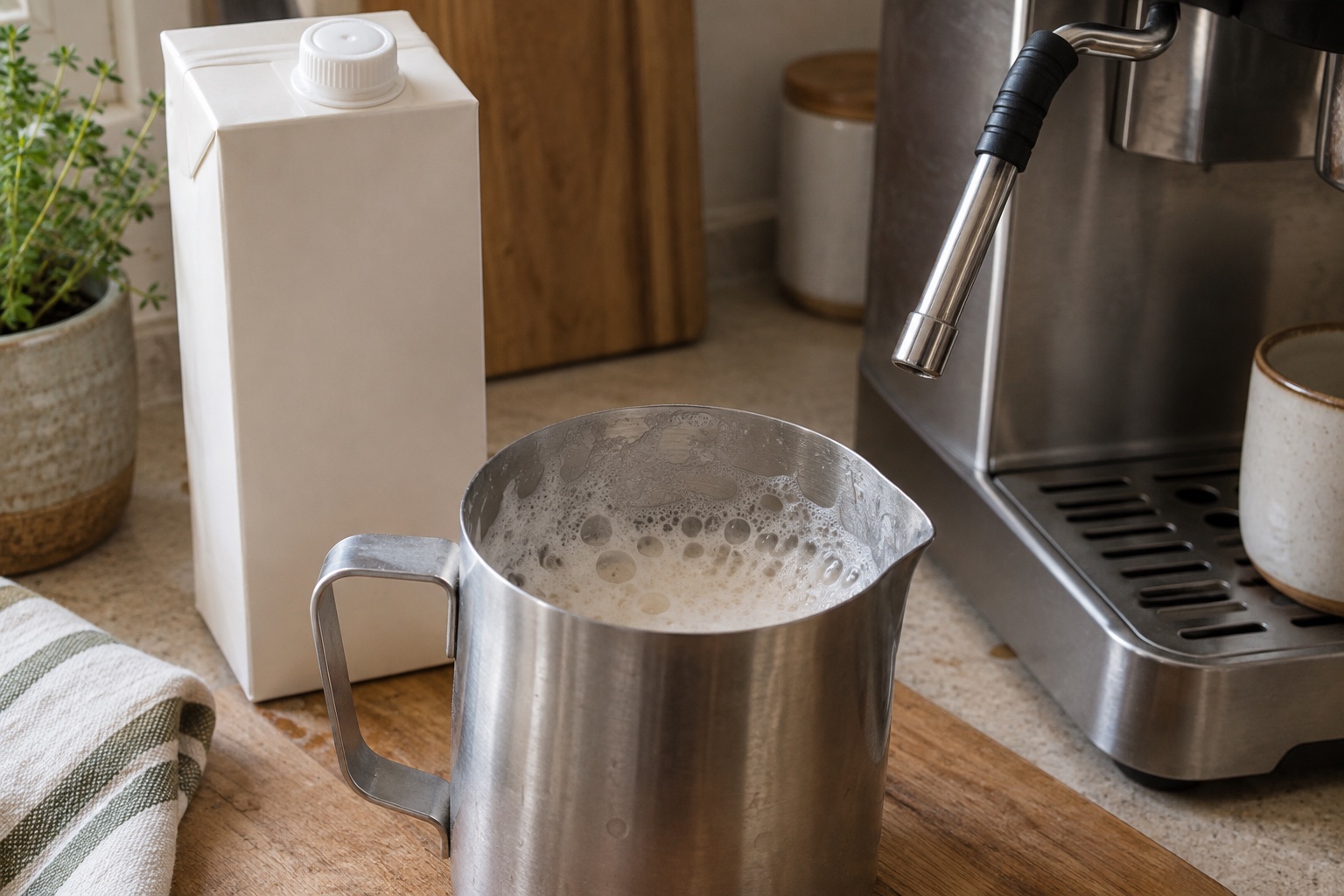
Barista-formulated oat drinks are designed for coffee but still vary by brand.
Large bubbles suggest over-aeration; thin liquid can suggest little air or the wrong formulation.
A carafe’s CLEAN programme and deeper washing are both relevant.
Separate foam failure from curdling in the finished acidic coffee.
Oat drink can make smooth milk coffee, but “oat milk” is not one formulation. Fat content, stabilisers, proteins, serving temperature and how the liquid is aerated all change the result. Before buying another frother, identify which failure you have: no foam, big dry bubbles, foam that quickly collapses, or curdling after it meets coffee. Those point to different next steps.
First test: carton and cold start
Check whether the carton is a barista-style drink intended to foam. Alpro’s Barista range explicitly distinguishes its coffee formulations from ordinary plant drinks; Oatly Barista Edition is also positioned for microfoam. Neither label guarantees that every machine will produce the same texture. Shake the carton if instructed, chill it as labelled and try a fresh small quantity. If another carton works under identical settings, your equipment may be fine.
Do not reuse warm leftover oat drink from a previous attempt. It gives you less time to introduce air and confuses the comparison. Taste and smell the product and respect its use-by and after-opening instructions; a frother cannot repair a spoiled carton.
If you have a steam wand
Begin with the tip just under the surface and introduce air only early. Then lower the tip slightly to roll the milk, breaking large bubbles into a smoother texture. Too much time with the tip exposed makes dry, coarse foam; too little air leaves hot thin liquid. Try the step-by-step steaming method with the same carton before changing multiple settings. Alpro gives around 65°C for its Barista Oat; that is brand-specific guidance, not a universal rule. Avoid chasing more foam by overheating the drink.
If steam flow itself has become weak, clean the wand by the machine manual. A blockage affects dairy and plant drinks, not just oat. Distinguish the milk problem from a coffee base that is too weak or too large beneath it.
If you have an electric jug or automatic carafe
Use the jug’s froth fill line, not its often-higher heat-only line; too much liquid can prevent useful circulation or overflow. Check that the whisk is fitted and the programme actually froths rather than merely warms. For a carafe, run its after-drink clean cycle and then its thorough disassembly wash when due. A blocked suction tube or spout can make any milk appear uncooperative. See how to clean a milk carafe. De’Longhi notes that plant-drink performance differs by type, brand and ingredients even in LatteCrema systems.
If the oat drink separates in coffee
Separation after pouring is not the same as failure to foam in the jug. A very hot drink and acidic coffee may make a less stable formulation split. Try a barista drink designed for coffee, let the coffee cool slightly, pour soon after steaming and compare with a different roast or recipe. Change one variable per cup. If it separates in the carton or smells wrong, discard it according to the label.
A useful two-cup diagnosis
Make one small drink with the existing carton and one with a different barista oat drink, keeping the machine, fill line, settings and temperature similar. If only one fails, formulation is likely the important variable. If both fail after they previously worked, inspect cleaning and machine settings. This is a practical home comparison, not a laboratory test. Our oat-milk setup guide can help if you are still choosing equipment.
Frequently asked questions
Is all barista oat milk equally good for latte art?
No. Formulations and machine techniques differ, and latte art needs integrated fine texture rather than just lots of foam.
Should I froth oat milk hotter to make it thicker?
Not as a first fix. Follow the carton’s and machine’s guidance; overheating can make the drink less pleasant.
Do I need a new frother?
Only after checking carton formulation, chilled start, fill level, cleaning and whether the same device can froth another milk.
Helpful products
Equipment routes that need different checks
A heated jug, manual steaming jug and automatic milk carafe fail in different ways. These products provide relevant context; a new machine is rarely the first fix.
MilkEasy Plus
- MilkEasy Plus
- Hot and cold modes
Heated jug frother
Lavazza MilkEasy Plus
Best for: hot or cold foam beside a pod or filter setup
An electric jug for heating or frothing dairy and plant drinks with a magnetic whisk.
Why it earns a place
- Hot and cold modes
- Plant-milk guidance
- Magnetic whisk
What to weigh up
- Separate appliance and cleaning
- Texture differs from steam
Skip it if You expect steam-wand-style microfoam.
Check the official specification →SEA401PSS0ZEU1, 420ml
- 420ml
- Handleless
- Silicone sleeve
Compact handleless jug
Sage Pro Control Jug
Best for: a practiced milk-steaming routine where hand position matters
A 420ml handleless stainless pitcher with removable silicone sleeve and angled opening. A specialist preference rather than a required upgrade.
Why it earns a place
- Angled opening
- Removable sleeve
- Compact
What to weigh up
- Grip is personal
- Smaller volume
- Higher cost
Skip it if You need a handle or are buying your first jug.
Check the official specification →ECAM220.61.GB
- 250g bean container
- Four one-touch recipes
- ECAM220.61.GB
One-touch bean-to-cup
De’Longhi Magnifica Start
Best for: a household that wants fresh beans and automatic milk drinks
This exact Magnifica Start variant includes an integrated grinder and LatteCrema Hot automatic milk system, with one-touch espresso, coffee and latte macchiato. It removes daily puck preparation but adds milk-system cleaning.
Why it earns a place
- Integrated grinder
- Automatic milk drinks
- Removable cleaning components
What to weigh up
- Large counter footprint
- Milk system needs regular cleaning
- Less direct control than separate equipment
Skip it if You enjoy dialling in separate grinder and espresso settings, or have a very shallow counter.
Check the official specification →Sources and scope
Alpro’s UK Barista guidance describes formulation and its oat-temperature recommendation; Oatly’s Barista Edition page describes its foam intent. De’Longhi’s LatteCrema guidance explicitly notes that plant-drink frothing varies by brand and ingredients. Troubleshooting order is an editorial inference from these sources and manufacturer cleaning instructions.