
Milk care · Steam wand
How to clean a coffee-machine steam wand after every drink
A model-conscious steam-wand cleaning routine, including immediate wiping, safe purging, cooled-tip inspection and what not to put into the water tank.
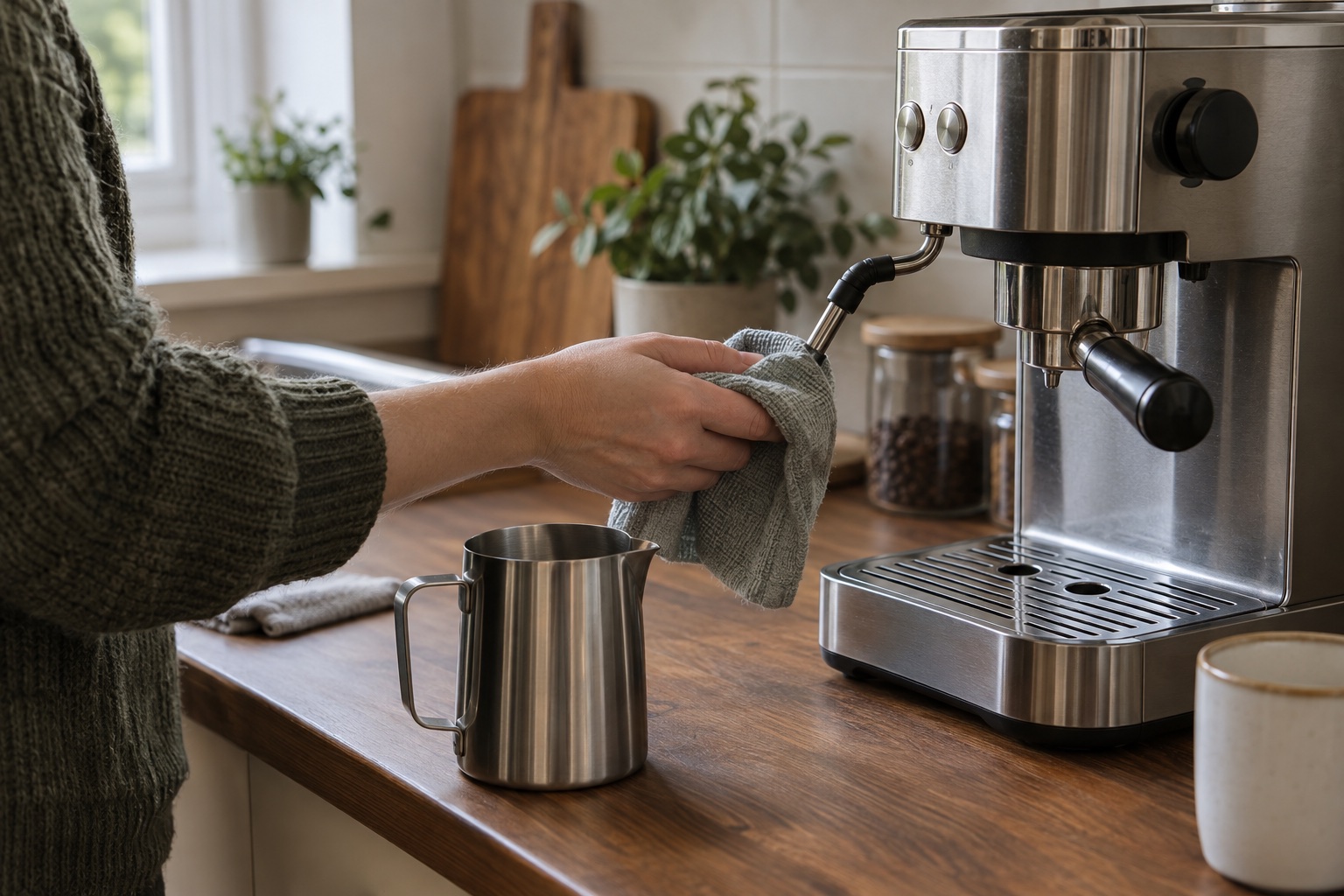
Treat hot steam, water and metal as burn hazards.
Use a separate cloth for the wand rather than the worktop.
A weak steam flow can also reflect a machine setting or heating issue.
Never force a pin into an unknown tip or dismantle a pressurised hot machine.
The easiest way to deal with dried milk on a steam wand is not to let it dry. Milk on the outside can bake onto hot metal; milk drawn into or left around the tip can interfere with airflow. The good routine is immediate but short. More aggressive cleaning belongs to the exact machine instructions, not a generic internet trick.
The after-drink sequence
Finish steaming and shut off steam before removing the wand from the jug, as your machine instructs. Keep fingers away from the tip. Wipe the outside promptly with a clean damp cloth reserved for milk equipment. Fold the cloth so your hand does not contact hot metal. Then run the short purge sequence specified by the maker, directing the jet into the drip tray or suitable container and away from skin. Some machines purge automatically; others require a manual brief steam release. Do not guess which yours does.
Rinse and dry the milk jug too. A milk cloth left damp and dirty on the machine is not a cleaning system; wash or replace it regularly. Sage’s Barista Express cleaning tutorial specifically treats wand cleaning as an every-use task, and the model manual determines how to unblock its own tip.
If dried milk is already on the outside
Allow the wand to cool completely, then use the approved cleaning method for its finish and any fitted sleeve. A damp cloth may soften light residue. Do not scrape the wand with a knife or abrasive pad that can damage the surface or leave scratches where milk catches again. A model may allow a removable tip to be soaked or cleaned with a supplied tool, but the permitted material, time and reassembly order vary. Check the diagram first.
If a hole appears blocked, do not press a random pin into it or try to remove a hot pressurised tip. Check your manual’s approved tool and procedure. If steam remains weak after proper cleaning, consider water level, heating, the machine’s steam setting and service advice before concluding the wand itself is defective. Our broader espresso-machine cleaning checklist separates milk, coffee oils and scale.
Keep the three cleaning circuits separate
Wand cleaning addresses milk-contact surfaces and steam exit. Group-head tablets address coffee residue in approved group cleaning cycles. Descaler addresses mineral scale in a model-approved water circuit. Interchanging them can damage equipment or leave residues in the wrong place. Never put a milk-cleaning solution into the water tank simply because the steam wand is clogged. For automatic milk carafes, see the separate carafe-cleaning guide, because its tube and lid need their own care.
Make it easier next time
Steam only the milk you need, keep a fresh wand cloth beside the machine and complete the wipe before carrying the drink away. If you are still learning milk technique, the steaming guide explains why you need the wand tip near the surface early; that positioning does not change the cleaning obligation. Oat drink can leave a visible film too, even though it is plant-based. Prompt cleaning matters for either.
Frequently asked questions
Can I leave the wand soaking in a cup overnight?
Only if the exact manual permits a particular soak. Long immersion can affect sleeves, joints or finishes and is not a substitute for after-use purging.
Do I need special cleaner after every drink?
Usually the immediate wipe and maker-approved purge are the daily steps. Follow model guidance for periodic deeper cleaning rather than adding chemicals by habit.
Why does steam smell of old milk?
Inspect and clean the milk-contact tip and any removable sleeve under the manual’s instructions. If smell persists after proper cleaning, seek manufacturer service guidance.
Helpful products
Wand-equipped setups and a milk jug
These are examples of machines whose exact manuals set their wand-care routine. The jug is useful for steaming but is not a cleaning chemical or repair tool.
EC685.M
- 149 × 330 × 305mm
- 1.1L water tank
- EC685.M
Slim manual espresso choice
De’Longhi Dedica Style
Best for: a narrow worktop and someone willing to prepare and steam manually
At about 15cm wide, the Dedica makes manual espresso possible on a narrow counter. Its Thermoblock, programmable cup quantities and adjustable drip tray are useful; a separate grinder is still needed for fresh-ground coffee.
Why it earns a place
- About 15cm wide
- Manual steam wand
- Ground coffee or ESE pods
What to weigh up
- No built-in grinder
- Pressurised baskets limit fine espresso control out of the box
Skip it if You expect one-touch coffee or milk, or cannot spare space for a grinder.
Check the official specification →Black Truffle, 54mm
- 54mm portafilter
- ThermoJet
- Automatic milk texturing
Fast heat and automatic milk
Sage Bambino Plus
Best for: a compact manual espresso route with supplied single- and dual-wall baskets
A compact ThermoJet machine with a 54mm portafilter and automatic milk texturing. The machine is capable, but a separate espresso grinder still determines how much control you have with its single-wall basket.
Why it earns a place
- Fast ThermoJet heat-up
- Single- and dual-wall baskets supplied
- Automatic steam wand
What to weigh up
- Separate grinder required
- Amazon colour/price variants fluctuate
- 54mm accessories need compatibility checking
Skip it if The current Amazon seller price is above your budget or you want a built-in grinder.
Check the official specification →SEA401PSS0ZEU1, 420ml
- 420ml
- Handleless
- Silicone sleeve
Compact handleless jug
Sage Pro Control Jug
Best for: a practiced milk-steaming routine where hand position matters
A 420ml handleless stainless pitcher with removable silicone sleeve and angled opening. A specialist preference rather than a required upgrade.
Why it earns a place
- Angled opening
- Removable sleeve
- Compact
What to weigh up
- Grip is personal
- Smaller volume
- Higher cost
Skip it if You need a handle or are buying your first jug.
Check the official specification →Sources and scope
Sage’s Barista Express cleaning tutorial establishes the every-use cleaning principle. The Sage manual for a steam-equipped machine distinguishes texturing, purge and wand care. Always apply the manual for the exact machine and tip assembly in front of you.