
Advice · Scales
Do you need coffee scales?
Decide whether a kitchen scale is enough, when a coffee scale helps espresso or filter brewing, and which measurements make a real difference.
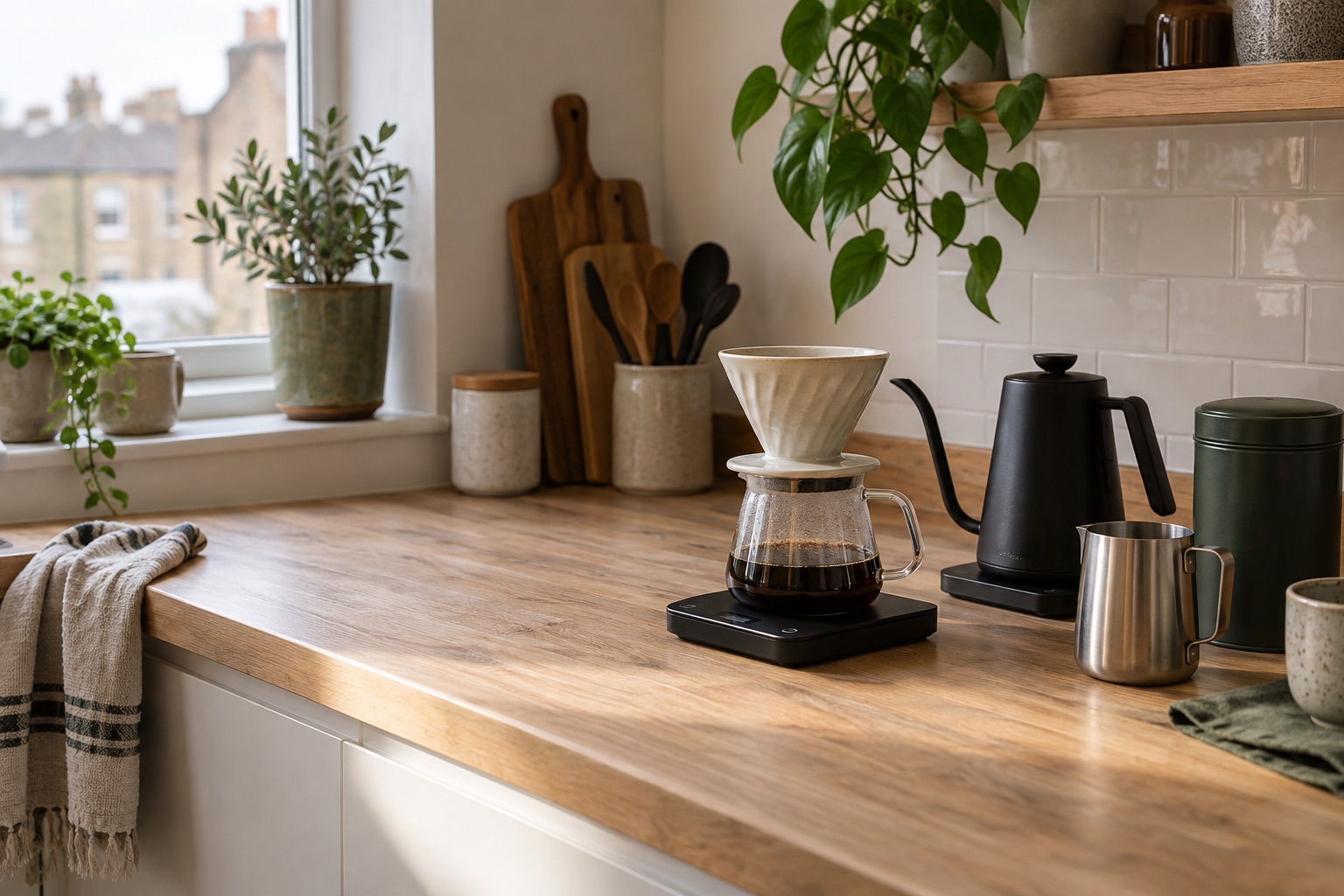
A spoonful is a volume, not a fixed mass of coffee.
Weigh the dry dose and brewed output before chasing accessories.
Espresso tray fit matters more than a long feature list.
Pod and automatic-machine users often have less to gain.
The question is not whether coffee requires precision equipment. It is whether one measurement would make your daily cup easier to repeat. A spoon can vary with bean size, roast, grind and how heaped it is. A marked mug can conceal a large difference between a short and a long pour. Weighing makes those variables visible, even if you never record a formal recipe.
When a kitchen scale is enough
For a cafetière or filter jug, a kitchen scale that reads in grams and can hold the vessel securely can establish a useful starting ratio. Weigh dry coffee, tare the vessel, then weigh water. If the finished cup is too strong or weak, adjust the ratio rather than guessing how much the scoop held. Our coffee-to-water chart gives amounts for common UK mug and batch sizes.
If the kitchen scale responds slowly, turns off mid-pour or cannot read small changes, a coffee-focused scale becomes a convenience upgrade. Do not mistake a 0.1g screen for proof of laboratory-grade accuracy; stable placement and a consistent method count too.
Espresso makes the case stronger
With a manual espresso machine, the dry coffee dose and the mass of liquid in the cup are two of the easiest controlled variables. A tiny cup can make “stop when it looks right” misleading. Weighing the output also helps diagnose watery espresso without changing grind, dose and shot length all at once.
The scale must fit on your actual drip tray with the cup under the spouts. Measure both width and vertical clearance. A compact Wacaco Exagram can be sensible here; a broad filter scale may obstruct the cup even if its specifications sound better.
When you can skip it
If your pod machine makes a drink you like and there is no user-controlled dose, a separate scale is rarely the next priority. An automatic bean-to-cup machine may offer adjustable strength and drink volume but not a straightforward dry-dose-to-output workflow. You can still use a scale for recipe experiments, yet cleaning, beans and machine settings may matter more.
For occasional cafetière, use a repeatable scoop and fill level if the result satisfies you. Consistency is a tool, not an obligation.
A five-minute test before buying
Borrow a gram-reading kitchen scale for three brews. Keep the same beans, grind and vessel. Weigh the dose and poured water, then taste. If the cup becomes easier to repeat, decide whether a timer or smaller footprint would improve your actual routine. If not, keep the worktop free.
Frequently asked questions
Can I measure coffee in tablespoons?
You can, but a tablespoon measures volume. Beans and grounds pack differently, so the mass will vary. A weighed dose is better for comparing one brew with the next.
Do I need a 0.01g jewellery scale?
No for ordinary home brewing. A practical stable coffee scale with sensible capacity is more useful than ultra-fine displayed digits and a platform too small for a mug.
Should I weigh water or the final coffee?
For filter, weigh the water added to the brewer. For espresso, weigh the drink collected in the cup. Those are different recipes and should not be treated as the same number.
Helpful products
If an ordinary scale cannot do the job
A narrow tray calls for a compact model; a dripper and server benefit from a stable platform with timer. Neither is compulsory for a first cup.
Exagram
- 77×124×24mm
- 0.3g–2kg
- 2 AAA batteries
Compact espresso fit
Wacaco Exagram
Best for: small drip trays and a simple timed dose
A narrow 77mm-wide scale with timer, tare and 0.1g steps up to 999.9g. Useful beneath an espresso cup but less comfortable for a wide filter server.
Why it earns a place
- Compact width
- Timer and tare
- Silicone pad
What to weigh up
- AAA batteries required
- Small platform
Skip it if You regularly weigh a large pour-over server.
Check the official specification →VST-2000B
- 0.1g increments
- Integrated timer
- VST-2000B
Straightforward filter scale
Hario V60 Drip Scale
Best for: pour-over brewers who want dose and brew time on one display
A simple coffee scale with 0.1g display steps and integrated timer. Its platform suits a dripper and server, but it occupies more space than a compact espresso scale.
Why it earns a place
- Integrated timer
- 0.1g increments
- Clear workflow
What to weigh up
- Broad footprint
- No complex brew modes
Skip it if You need a scale for a narrow espresso drip tray.
Check the official specification →Sources and scope
The product-fit examples use Wacaco's Exagram dimensions and Hario's scale specifications. The recommendation follows those dimensions and functions.