
Manual brewing · Practical method
How to use a moka pot
A safe, repeatable stovetop moka method: water below the valve, untamped grounds, gentle heat, when to remove the pot and how to clean it.
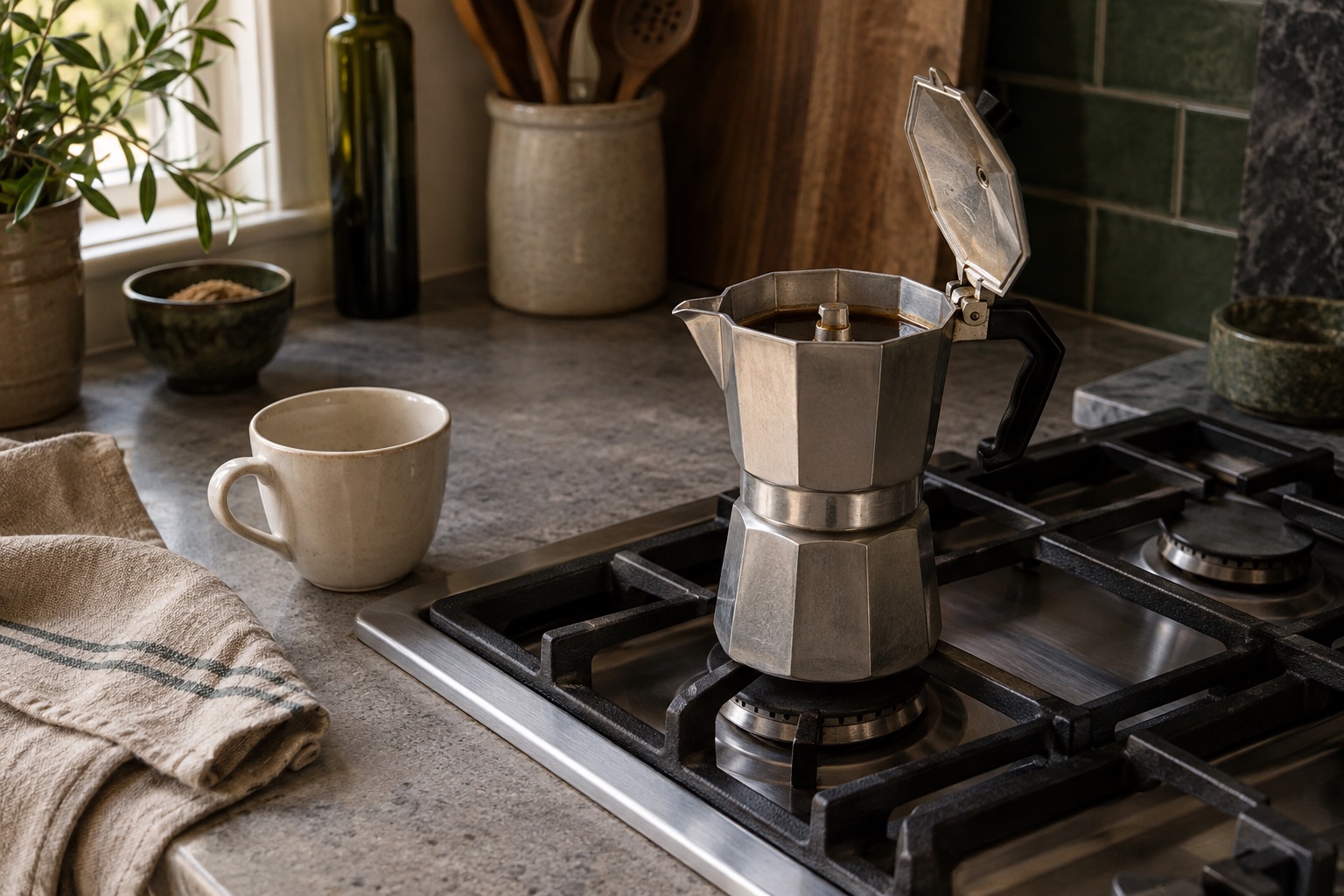
Never cover the safety valve with water or grounds.
Do not tamp the basket like an espresso puck.
Keep a gas flame smaller than the pot base.
Cool before unscrewing; wash and dry the gasket, funnel and pot.
A moka pot is a three-part brewer: water chamber, ground-coffee funnel and upper collecting chamber. Heat drives water through the grounds into the top. It makes a strong, short drink rather than true machine espresso. If you have not bought a pot, start with the moka-pot buying guide to settle hob and size first.
Before you start: size, water and grind
The printed 'three cup' or 'four cup' size means small moka servings, not large mugs. Use the pot's intended amount of water—just below the safety valve—and a comfortably full funnel. A smaller pot is often better for a solo drink than trying to half-fill a large one. Start with coffee ground for moka, around medium-fine; too powdery a grind can restrict flow. If you have a burr grinder, the grind-size guide helps you find a repeatable setting.
Use clean potable water. Bialetti's standard instructions begin with water in the cool base, and following the product manual is the simplest first method. Some online recipes suggest preheated water to shorten time on the hob, but that makes assembly a burn risk. Learn the cool-base version before adapting it. Ensure the gasket is seated, funnel is clear and safety valve is unobstructed.
Step-by-step moka method
- Pour water into the bottom chamber to just below the safety valve. Do not fill over it.
- Place the funnel in the base and loosely fill it to the top with moka-ground coffee. Level without pressing or tamping. Remove stray grounds from the rim so the gasket can seal.
- Screw the top on snugly without overtightening. Hold the pot body rather than levering on its handle. Close the lid and position it securely over a suitable burner or plate.
- Use a low-to-medium heat. On gas, keep the flame underneath the base, away from the handle. Do not leave the brewer unattended.
- Coffee should flow from the central spout into the upper chamber. As the flow pales and sputtering begins, turn off the heat and move the pot safely off the burner. Do not wait for extended violent bubbling.
- Allow the pot to settle, stir the collected coffee gently if you want even strength between pours, then serve carefully. Hot metal and trapped steam remain a burn hazard.
Time will vary with burner, pot size and starting water temperature; do not chase one universal minute mark. The cues are steady flow followed by sputtering, then removal from heat. For a milder long drink, add hot water after brewing instead of overfilling the base.
When it tastes harsh or weak
Harsh, smoky coffee can come from excessive heat or leaving the pot on the hob through prolonged sputtering. Try gentler heat and remove it earlier. A bitter taste can also reflect dark beans or a too-fine grind. If it barely flows, switch off, allow full cooling and inspect the funnel, filter plate and gasket before trying again—never force a pressurised hot pot open. A thin drink may reflect stale grounds, a very coarse grind or unexpectedly large added water. Change one variable at a time.
Moka coffee is concentrated but not espresso; if your aim is a big clean mug, pour-over or cafetière may better suit the portion. Milk is best warmed or frothed separately. For a cold drink, brew a short moka coffee then chill or pour over ice; that is not the same process as cold brew.
Aftercare that keeps the next cup clean
Let the pot cool fully, unscrew it and discard grounds. Wash according to the exact pot manual, inspect the gasket and filter plate, clear residue from the funnel, and dry pieces separately before reassembly. Never scrape or block the safety valve. Aluminium Moka Express care differs from stainless Venus care; do not assume dishwasher permission for either. A worn or loose gasket should be replaced with the correct size rather than ignored.
Frequently asked questions
Do I need espresso-fine coffee?
Not necessarily. Moka is a different brewer. Start with moka-appropriate medium-fine grounds and adjust by flow and taste. Very fine grounds can impede flow.
Should the lid be open so I can watch the flow?
You can learn the sound and timing with the lid closed; open lids increase splash risk. Follow the pot maker's directions.
What if no coffee comes out?
Turn off the hob and let the pot cool completely. Check the water, grind, basket, seal and valve before retrying. Do not open a hot pressurised brewer.
Can a three-cup pot make a full mug?
Not undiluted. It is designed for short servings; add hot water or milk after brewing if you want a longer drink.
Helpful products
Pick the pot to match your hob
The classic three-cup aluminium pot is for suitable non-induction hobs; the four-cup stainless Venus is the direct-induction candidate when the hob detects its base.
3-cup aluminium, 130ml nominal
- 3 moka cups
- 130ml nominal
- Aluminium
Classic small hob pot
Bialetti Moka Express
Best for: one or two short strong coffees on a compatible gas or electric hob
The classic aluminium octagonal moka pot. Three moka cups mean short servings, not three full mugs; it is not a direct-induction option.
Why it earns a place
- Compact footprint
- Replaceable gasket
- Simple classic design
What to weigh up
- Not direct induction
- Small output
- Hand washing and gasket care
Skip it if Your only hob is induction or you need a full 300ml mug directly from the pot.
Check the official specification →4-cup stainless steel induction
- 4 moka cups
- About 170ml nominal
- Stainless steel
Induction-ready choice
Bialetti Venus
Best for: an induction hob with a zone that detects its small base
A stainless moka pot nominally around 170ml for four short moka servings. Its induction-ready base still needs to meet your hob's minimum pan diameter.
Why it earns a place
- Induction-compatible steel
- Four short servings
- Easy-pour shape
What to weigh up
- Zone minimum can be an issue
- More expensive than aluminium
- Still a small brew
Skip it if Your zone refuses small pans or you want a large mug without dilution.
Check the official specification →Sources and method note
The water level, untamped basket and assembly follow Bialetti's Moka Express instructions. Its first-use advice also calls for initial rinse and discarded brews. Consult the manual for your particular model and hob.